






Can a Copyrighted Logo Defeat a Trademark Application in Vietnam?
No trademark registration in Vietnam? You may still be able to stop a trademark squatter.
For foreign brand owners, having your logo stolen in a new market is a nightmare. But a recent case involving Maurten, a Swedish sports nutrition brand, shows how copyright can become a powerful legal weapon.
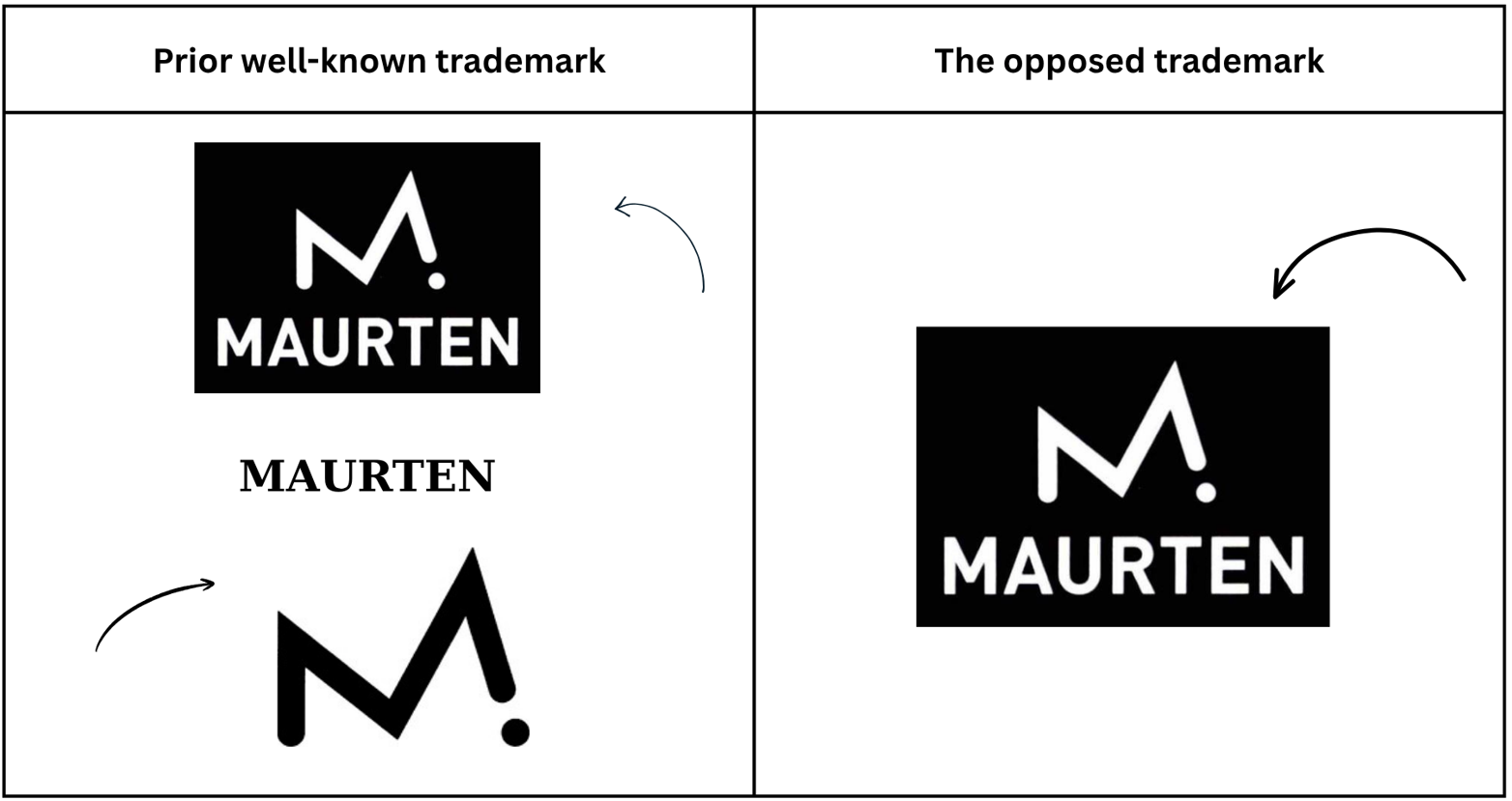
In 2023, a Vietnamese individual filed a trademark application for a logo identical to Maurten’s original logo.
But Maurten had a serious problem: At that time, it had no earlier trademark registration, no pending trademark application, and no meaningful commercial presence in Vietnam.
Therefore, traditional trademark arguments alone might not have been enough.
So, they pivoted to a different strategy: Copyright.
Under Article 73.7 of Vietnam’s IP Law, an applied-for trademark containing a copy of a copyrighted work, without the copyright owner’s permission, must not be protected as a trademark.
The opposition showed that the two logos were identical in their lines, curves, structure, and overall visual appearance. It also established that Maurten’s logo qualified as a copyright-protected artistic work.
In March 2026, the Intellectual Property Office of Vietnam accepted the copyright arguments and refused the squatter’s trademark application.
Why is this decision important?
Because copyright normally arises automatically when an original logo is created. It does not necessarily require an earlier trademark registration or commercial use in Vietnam.
But copyright is not an automatic solution. Brand owners must still prove ownership, originality, the date of creation, and unauthorized copying.
The practical lesson is clear: Preserve your original design files, contracts, creation records, publication materials, and other evidence relating to your logos and visual assets.
In Vietnam, your logo is more than just a brand. It may be the legal weapon that stops a trademark squatter.
QUAN, Nguyen Vu | Partner, IP Attorney
Related Articles:
- Brompton – When a Folding Bicycle Becomes a “Work” – The Judgment of the Court of Justice of the European Union
- From Europe to Vietnam – Three Questions for Determining the Copyright Eligibility of Functional Products as Works of Applied Art
- Cancellation of Bad Faith Trademark Registration in Laos: The PINDUODUO Case
- Overcoming the Territoriality Trap: How FUMARI Blocked a Bad-Faith Trademark Filing in Laos Without Local Registration
- Justice for “Foellie”: How KENFOX Invalidated a Bad-Faith Filing & Halted a Retaliatory Campaign of IP Abuse?
- Registering a Trademark in Bad Faith in Vietnam: How to Prove the Applicant’s Intentions and Motives
- Trademark Refusal in Vietnam: What Strategy Enabled the “Three-Circle” Mark to Overcome a Likelihood-of-Confusion Objection?
- “Bad Faith”, “Conflict of Rights”, and “IP Abuse” in Vietnam: What Lessons Can Be Drawn from the “Foellie” Trademark Dispute?
- A court case concerning well-known trademark “X-Men” between Marvel Characters Inc. and the Vietnamese applicant
- Successful Raid Against Trademark Infringement of LACTOMASON: A Significant Victory for KENFOX and Market Surveillance Team No. 1