




Brompton – When a Folding Bicycle Becomes a “Work” – The Judgment of the Court of Justice of the European Union
Can a functional product—created to satisfy everyday practical needs—be regarded as an artistic “work” eligible for copyright protection? In the conventional thinking of many businesses and even legal practitioners, the answer is almost automatically “no”. Bicycles are associated with patents, clothing and footwear belong to the realm of industrial designs, while sandals and handbags are merely consumer goods. However, the judgment of the Court of Justice of the European Union (“CJEU”) in Brompton Bicycle v. Chedech/Get2Get (Case C-833/18) introduced a new perspective: a functional shape may be viewed not merely as a technical solution, but also as the creative expression of its author—provided that it reflects the designer’s free choices and personal imprint.
It is precisely this intersection between functionality and creativity, between technology and art, that has made the Brompton case a landmark decision. The case raises an important question: can objects that are commonly regarded as purely utilitarian items—from folding bicycles and shoes to chairs and product packaging—also possess the legal status of a work of art?
Against this backdrop, a central issue arises for both scholars and practitioners: How should the boundary be drawn between a shape that is entirely dictated by technical function and a shape that embodies the author’s personal creative contribution?
1. Background
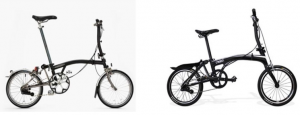
Brompton Bicycle Ltd is a British company founded by SI, renowned for its “Brompton” folding bicycle, which can be folded into three positions: (i) fully folded, (ii) fully unfolded, and (iii) an intermediate position enabling the bicycle to remain balanced on the ground. The design had previously been protected by a patent. However, that patent subsequently expired, thereby opening the door for competitors to exploit similar technical solutions.
Get2Get (Chedech/Get2Get) introduced onto the market another folding bicycle—commonly referred to as the “Chedech bicycle”—whose visual appearance was very similar to that of the Brompton bicycle and which, notably, was likewise capable of folding into the same three positions.
In 2017, SI and Brompton brought proceedings before the Liège Court (Belgium), seeking:
- A declaration that the Chedech bicycle infringed copyright in the Brompton bicycle design; and
- An order requiring Get2Get to cease the infringement and withdraw the product from the market.
Defendant’s Argument – Get2Get: Get2Get argued that the shape of the Chedech bicycle (and correspondingly the shape of the Brompton bicycle) was determined by technical requirements, namely the need to allow the bicycle to fold into the three positions described above. Accordingly, if any protection were available, it should fall within the domain of patent law or design law rather than copyright law. In other words, Get2Get contended that the bicycle’s shape was entirely constrained by technical functionality and therefore could not qualify for copyright protection, but only for patent protection (which had already expired).
Claimants’ Argument – Brompton / SI: Brompton and SI argued that although the ability to fold into three positions constituted a technical requirement, there were numerous different ways of designing a bicycle capable of achieving that technical objective. The creator had selected one particular form from among those available possibilities. That choice reflected personal creative judgment and individual expression. Consequently, the shape of the Brompton bicycle could still qualify for protection as a “work” under copyright law.
The Belgian court acknowledged that, under national law, a functional object (such as a bicycle) could enjoy copyright protection provided that it possessed originality. However, the court encountered difficulty where the product’s shape appeared to be “necessary” in order to achieve a technical result. In particular, the Belgian court referred to the CJEU’s earlier judgment in DOCERAM (Case C-395/16) concerning Community designs. In that case, the CJEU emphasized that the existence of alternative designs is not, by itself, the decisive factor in determining whether a product’s appearance is dictated by technical function. In other words, the fact that alternative designs may exist for achieving the same technical result is not the sole and conclusive evidence that a product possesses originality. It remains necessary to examine carefully the extent to which the product’s external appearance is constrained by technical considerations.
2. The Core Legal Issue: Determining the Technical Functionality of a Product and Its Status as a “Work”
Against this background, the Liège Court (Belgium) referred a preliminary question to the CJEU, seeking clarification on two issues:
(1) If the shape of a product is (at least in part) necessary to achieve a technical result, can that product nevertheless be protected by copyright? (In other words, where a shape is dictated by technical function, can it still be regarded as a “work”?)
(2) In assessing whether a shape is necessary to achieve a technical result, should the following factors be taken into consideration:
- The existence of other shapes capable of achieving the same technical result? (What role should the availability of alternative shapes play?)
- The degree of effectiveness of the shape in achieving the technical result?
- The intention of the alleged infringer in seeking to achieve that technical result?
- The existence of a prior patent (now expired) relating to the process used to achieve that technical result?
Viewed more broadly, these questions concern the boundary between technology and creativity, and between the limited-term exclusivity granted by patents and industrial designs and the longer-term exclusivity afforded by copyright.
3. Analysis of the CJEU
When Can a Functional Product Be Regarded as a “Work” Eligible for Copyright Protection?
The Belgian court’s first question may be understood as follows: Does EU law (in particular Directive 2001/29/EC) permit copyright protection for a product whose shape is determined, at least in part, by technical requirements? Embedded within that question is a further issue: does technical necessity automatically preclude a product from qualifying as a “work”? If not, how should such an assessment be carried out? Put more simply, the Belgian court was essentially asking: If the shape of a product (in this case, a bicycle) must necessarily take a certain form for technical reasons—for example, because it must be foldable or capable of standing on its own—can that shape still be regarded as the author’s creative expression and therefore qualify for copyright protection?
In its judgment, the CJEU provided clear answers:
[1] Does the Concept of a “Work” Exclude Functional Products?
The CJEU held that: (i) the mere fact that a shape contains technical elements, or that it is at least partly necessary to achieve a technical result, does not automatically exclude that subject matter from copyright protection; and (ii) copyright protection may still be available if the subject matter satisfies the requirements for classification as a “work”. According to the Court, two cumulative conditions must be met before a subject matter can qualify as a “work”.
Condition 1: Originality
The subject matter must constitute: “the author’s own intellectual creation.”
This requirement consists of three elements:
(i) The author must have exercised free and creative choices.
(ii) The expression must reflect the author’s personal touch.
(iii) Where the shape is entirely dictated by technical considerations or mandatory rules, originality cannot exist.
Condition 2: Identifiable Expression
A “work” must be expressed in a form that is sufficiently precise and objective to enable public authorities, courts, and third parties to identify it.
In other words, the CJEU rejected the proposition that a functional product can never qualify as a work. This is the first and most important step in the Court’s reasoning: There is no automatic exclusion of functional products from copyright protection.
[2] If Functional Products Are Not Automatically Excluded from Copyright Protection, What Is the Applicable Test?
The CJEU addressed this issue by referring to the concept of “originality”, as developed through its earlier case law, including Infopaq, Painer, and Cofemel.
(a) Originality Remains the Central Criterion: A product whose shape is necessary to achieve a technical result may qualify as a “work” only if:
- The author had room to make free and creative choices when creating that shape; and
- The chosen shape reflects the author’s personal imprint.
(b) Distinguishing Between a Technical Idea and Creative Expression
The CJEU reiterated a fundamental copyright principle: Copyright protects expression, not ideas or technical solutions. Accordingly:
- A technical idea consists of the solution used to achieve a technical result (for example, a bicycle capable of folding into three positions and remaining balanced).
- A creative expression consists of the particular form chosen by the author (such as the arrangement of the frame, proportions, curves, and visual configuration) within the scope of the author’s freedom.
The Court stated that where a particular aspect of a shape is entirely dictated by technical function, the author has no genuine freedom of choice. In such circumstances, the technical idea and its expression become inseparable. That aspect therefore cannot qualify as a “work”. However, those aspects of the design that remain subject to the author’s discretionary choices—and that reflect the author’s creative style—may still qualify for copyright protection.
(c) The Relevance of the Factors Suggested by the Belgian Court (Alternative Designs, Patents, Technical Effectiveness, etc.)
The CJEU’s approach demonstrates a nuanced distinction between technical elements and creative elements:
- The existence of other shapes capable of achieving the same technical result is merely an indication that the author may have enjoyed a degree of freedom of choice. However, it is not the sole decisive criterion for determining originality.
- The technical effectiveness of a shape, as well as the existence of an expired patent, may be used as analytical tools to clarify which aspects are purely technical and which aspects may embody creative expression. Nevertheless, these factors do not constitute an independent legal test competing with the originality standard.
- The intention of the defendant (for example, whether the shape was adopted for technical rather than artistic reasons) is irrelevant to the assessment of whether the subject matter constitutes a “work”. The central issue is whether the original creator genuinely exercised creativity, rather than what the defendant intended when reproducing the shape.
Accordingly, the CJEU confirmed that these auxiliary factors—alternative designs, patents, technical effectiveness, and the defendant’s intentions—may assist in the analysis, but they cannot replace or compete with the fundamental criterion: the originality of the original author.
[3] May the Belgian Court Conclude That the Presence of Technical Elements Automatically Excludes Copyright Protection?
The CJEU answered this question unequivocally: The Belgian court is not permitted to reason that: “Because the product contains technical elements, it cannot enjoy copyright protection.” This conclusion directly rejected the principal argument advanced by Get2Get: “If a shape is technical in nature, it can only be protected by patent law or design law, but never by copyright law.”
The CJEU rejected that proposition on two grounds.
(a) Copyright and Patent/Design Protection Are Parallel Regimes That Do Not Exclude One Another: EU law permits the cumulative protection of a subject matter under both design law and copyright law. Nothing in Directive 2001/29 provides that: “A technical product cannot be protected by copyright.” Consequently, Member States (including Belgium) are not entitled to create a category of subject matter that is automatically excluded from copyright merely because it possesses a functional character.
(b) Protection Depends on Originality, Not on the Presence of Technical Elements:
The CJEU emphasized that courts may not simply identify a technical aspect and conclude: “This is a technical product; therefore it cannot be a work.” Instead, courts must undertake a substantive analysis to determine:
- whether the author retained creative freedom when designing the shape;
- whether the shape resulted from free and creative choices; and
- whether it reflects the author’s personal imprint.
Only after conducting that assessment can a court determine whether the shape qualifies as a copyright-protected work.
4. The Boundary Between Copyright and Patent/Industrial Design Protection: The CJEU’s Approach
The CJEU confirmed that copyright and patent/industrial design protection are parallel systems of protection that do not exclude one another.
At the outset, the Court rejected the underlying premise relied upon by both the defendant and, to some extent, the Belgian court: “If a product contains technical elements, it belongs exclusively to the field of patents or industrial designs and falls outside copyright.”
The Court clarified that:
- Directive 2001/29 does not establish any rule excluding functional subject matter from copyright protection.
- Copyright is not limited by the scope of patent protection or industrial design protection.
- This principle had already been reinforced by the Court’s earlier judgments in Cofemel and Brompton.
- EU law expressly allows cumulation, meaning simultaneous protection under copyright and design law.
Accordingly, a product that was previously protected by a patent, or that incorporates technical structures, is not automatically excluded from copyright protection.
The CJEU reaffirmed that the sole criterion for determining whether a subject matter qualifies as a “work” is originality.
According to the CJEU, regardless of whether the subject matter is an artistic work, a utilitarian object, an item of furniture, or a technical product, there is only one decisive criterion: originality, namely, whether it constitutes “the author’s own intellectual creation.”
The concept of originality comprises two elements: (i) The author must have enjoyed freedom of choice (free choices), meaning that technical constraints must not have completely eliminated the possibility of creative expression; and (ii) Those choices must reflect the author’s personal touch, that is, the author’s individual personality and creative imprint.
This principle has been applied consistently by the CJEU in its jurisprudence from Cofemel through Brompton.
The CJEU then explained how the distinction should be drawn between “technical” elements and “creative” elements.
This section constitutes the Court’s central response to the Belgian court’s questions. The CJEU formulated a two-branch approach.
(1) Where the Shape Is Entirely Dictated by Technical Function
A shape cannot qualify as a work where:
- the technical result imposes a single possible shape;
- the author retains no room whatsoever for creative choices; and
- the technical idea and the form of expression become inseparable.
In such circumstances, the originality requirement cannot be satisfied. Consequently, the subject matter does not constitute a “work” within the meaning of Directive 2001/29.
In that situation, patent law or industrial design law constitutes the appropriate form of protection. The Court used precisely this reasoning in addressing Get2Get’s argument that the three-position folding mechanism dictated the entire shape of the bicycle. The CJEU explained: If that proposition were in fact correct, the Belgian court could conclude that no copyright-protected work exists. However, the court must first establish that no creative freedom whatsoever remained available to the designer.
(2) Where the Shape Is Not Entirely Determined by Technical Function
Even where technical considerations are present, the subject matter may still qualify as a work if:
- the author retained freedom in choosing the shape;
- those choices were genuinely free and creative; and
- the resulting shape reflects the author’s personal style.
At paragraph 34 of the judgment, the CJEU emphasized that the national court must determine whether, through the product’s shape, the author expressed creativity by making free choices and whether the resulting shape reflects the author’s personal imprint.
This constitutes the official EU standard applicable to all functional products.
5. How Did the CJEU Address the Defendant’s Arguments?
The defendant advanced three principal arguments: (i) the technical mechanism allowing the bicycle to fold into three positions dictated the bicycle’s entire shape; (ii) the fact that the product had previously been protected by a patent meant that it could not subsequently fall within the scope of copyright protection; and (iii) the technical nature of the product prevented its shape from satisfying the originality requirement. However, the CJEU rejected each of these arguments through a clear and systematic line of reasoning.
[i] The Prior Existence of Patent Protection Does Not Preclude Copyright Protection
First, the CJEU held that the expiry of a patent does not negate the creative character that a product may possess. Although the existence of a patent may be used as an indicator to assist national courts in distinguishing between purely technical elements and potentially creative elements, it does not follow that copyright protection is unavailable merely because the product was previously protected by a patent. In other words, patent protection does not exclude copyright protection. Rather, a patent may serve as an evidentiary tool in identifying the boundary between technical functionality and creative expression.
[ii] Technical Functionality Does Not Exclude Copyright Protection—Only Those Elements Entirely Dictated by Technical Function
The CJEU emphasized that technical considerations do not automatically exclude copyright protection. Only where a particular component of a product is entirely dictated by technical function is that component excluded from protection. Conversely, those aspects of the product that embody the author’s creative contribution may still qualify for copyright protection. This demonstrates that technical functionality excludes only those elements wholly governed by technical necessity; it does not necessarily deprive the entire product of copyright protection.
[iii] The Existence of Alternative Designs Is Evidence, Not a Legal Test
The parties may endlessly debate whether sufficient “creative freedom” existed. The defendant may argue: “Technical considerations imposed a single possible shape.” Through this argument, the defendant seeks to demonstrate that the shape of the folding bicycle was an inevitable consequence of technical requirements and that no free choices remained available to the author. If that proposition is correct, the product would fail to satisfy the originality requirement and therefore could not enjoy copyright protection.
By contrast, the claimant may respond: “There are multiple ways of achieving a three-position folding mechanism.” This argument seeks to establish that, notwithstanding the technical requirements, the author still enjoyed a degree of creative freedom in selecting the particular shape adopted. Accordingly, the shape would not have been entirely dictated by technical considerations and could therefore satisfy the originality requirement necessary for recognition as a copyright-protected work.
Faced with this situation, the CJEU clarified that the existence of alternative designs is not a decisive legal criterion. This is one of the most nuanced aspects of the Court’s reasoning. Demonstrating that multiple designs can achieve the same technical result may suggest that the author enjoyed a degree of creative freedom. However, the mere existence of alternative solutions does not automatically establish originality. Rather, national courts must determine whether the author genuinely exercised free and creative choices and whether the resulting shape reflects the author’s personal imprint. These are the factors that ultimately determine whether a subject matter qualifies as a “work”.
[iv] The Defendant’s Purpose Is Irrelevant
One of Get2Get’s arguments was that the shape had been chosen entirely for technical reasons rather than for artistic reasons. The CJEU rejected this argument unequivocally. According to the Court, the purpose or motivation of the defendant when reproducing the product is entirely irrelevant to the assessment of originality. Originality must be assessed at the moment when the author created the product. The relevant inquiry is whether the author genuinely exercised free and creative choices and whether the resulting shape reflects the author’s personal imprint. In other words, originality is linked to the author’s original creative process and does not depend upon the reasons why the defendant subsequently chose to reproduce the shape.
Conclusion
The Brompton judgment conveys a very clear message: Functional products are not automatically excluded from the scope of copyright protection. The decisive consideration is not what the object is used for, but whether its form reflects free and creative choices and bears the personal imprint of its author. This represents an important point of convergence between the legal reasoning of the European Union and the evolving direction of Vietnamese law.
From the perspective of Vietnamese intellectual property law, the concept of an applied art work has already been recognized with a sufficiently broad scope to encompass numerous functional products, including furniture designs, product packaging, fashion products, and other industrially designed goods. The emphasis placed upon the aesthetic dimension associated with practical utility demonstrates that Vietnamese lawmakers have already opened the door to viewing product designs not merely as technical solutions or industrial designs, but also as copyright works where the requirements of originality and identifiable expression are satisfied. If applied consistently, the Vietnamese legal system can make effective use of this additional layer of protection in order to strengthen legal safeguards available to designers and businesses, particularly in an environment where product design copying is becoming increasingly sophisticated.
Ultimately, the challenge facing enforcement authorities in Vietnam is not merely to accept, as a matter of principle, that a functional product may qualify as a work. Rather, the challenge lies in developing standards that are rigorous, transparent, and predictable in practice. At that point, the relevant question will no longer be: “Can a functional product be a work?” Instead, the real question becomes: How should we assess the degree of creative freedom and the personal imprint embodied in such products in a manner that protects creativity while avoiding distortions to competition and technological progress? This is likely to remain a fertile area for both academic discussion and practical development as Vietnamese intellectual property law continues to evolve.
With more than 15 years of experience and an established reputation in the field of intellectual property, KENFOX IP & Law Office possesses a deep understanding of the legal challenges associated with the protection and enforcement of rights in applied designs. We assist businesses not only in securing and registering rights in industrial designs and copyright works, but also in developing sophisticated advisory and litigation strategies focused on identifying and proving the “core creative elements” of a design—the key factor in effectively protecting design assets and maximizing the prospects of success in complex infringement disputes.
QUAN, Nguyen Vu | Partner, IP Attorney
NGA, Đao Thi Thuy | Senior Patent Attorney
Kim Anh, Nguyen Thi | Patent Executive
Related Articles:
- Cofemel v. G-Star: The new standard of the European Court of Justice – Can a pair of jeans be considered a “work of art”?
- USM v. Konektra: Does a Functional Product Require a Higher Degree of Creativity to Merit Copyright Protection?
- New product launch: How to keep your product design from being “stolen”?
- Industrial Design Related Matters in Vietnam
- Industrial design protection for products under the Hague System – Key to business success in Vietnam
- To register or to lose, a costly lesson from a typical industrial design dispute in Vietnam
- Provisional rights to patents and industrial designs in Vietnam – What you need to know?
- Industrial Design Or Copyright Protection, Which You May Be Unaware Of?
- What are Key Considerations for Industrial Design Divisional Application in Vietnam?
- Copyright – a powerful and effective weapon to repress trademark and industrial design infringements in Vietnam
- 10 Key Points from Vietnam’s New IP Decree No. 65/2023/ND-CP
- Handling intellectual property rights infringement in Vietnam: Which measures are effective?
- Difference between Copyright and Industrial Design Right
- Amendments to patent and industrial design regulations under the draft of the amended Intellectual Property Law