Download
Conventional legal thinking often defaults to the premise that “functional products”—such as a pair of jeans, a pair of sandals, a fashion handbag, or a perfume bottle—fall primarily within the scope of Industrial Design protection. Rights holders rarely consider the mechanism of Copyright, due to the misconception that the form of mass-produced products can hardly meet the threshold of a “work” or a “work of applied art” to warrant protection.
KENFOX IP & Law Office will analyze the case of Cofemel v. G-Star to elucidate how the Court of Justice of the European Union (CJEU) established a new standard in viewing applied designs from a Copyright perspective. The case not only poses the question of whether a pair of jeans—traditionally viewed as a common consumer product—can be recognized as a “work,” but also opens up a broader debate regarding the boundary between utility and creativity. From this, businesses can conceptualize the prerequisites that must be satisfied to determine when a “functional product” can still be protected under copyright law, alongside the industrial design protection mechanism.
1. Background of the incident
G-Star Raw (G-Star Raw CV) is a renowned Dutch fashion company, founded in 1989 in Amsterdam. The brand is globally famous for its denim products (jeans) and its raw, rugged design style. Cofemel (Cofemel – Sociedade de Vestuário SA) is a Portuguese fashion company. It owns the fashion brand Tiffosi, which is highly popular in Portugal and Spain, specializing in the manufacture and trade of ready-to-wear apparel.
In 2013, G-Star Raw initiated legal proceedings against Cofemel, alleging that Cofemel had copied its jeans and t-shirt models named “ARC” and “ROWDY”. The Plaintiff, G-Star, argued that the “ARC” and “ROWDY” models were not merely everyday apparel, but rather the culmination of an intentional, original creative process, thereby qualifying them as “works” eligible for protection under copyright law. Conversely, the Defendant, Cofemel, countered that clothing serves a functional purpose, and such apparel designs cannot be classified as “works” entitled to such protection. Additionally, Cofemel argued that to be eligible for copyright protection, a design must transcend into “art” and possess a specific “aesthetic value” or “artistic effect”.
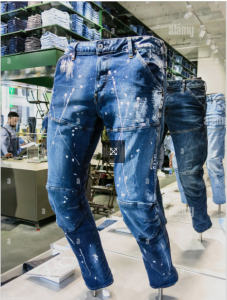
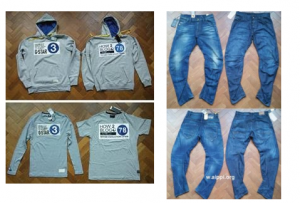
Image source : www.alamy.com/ www.sgcr.pt and www.aippi.org
The Portuguese Court of First Instance ruled in favor of G-Star, recognizing the ARC and ROWDY models as “works,” ordering Cofemel to cease its infringing acts, and directing the disgorgement of profits. Cofemel appealed the judgment to the Tribunal da Relação de Lisboa (Court of Appeal, Lisbon, Portugal), which subsequently affirmed the lower court’s decision.
The case was further appealed to the Supreme Court of Portugal. This apex court acknowledged that G-Star’s designs were the result of a creative design process featuring specific formative elements, and that Cofemel had incorporated several of those elements into its own products. However, the Supreme Court faced a legal dilemma: the Portuguese Copyright Act did not explicitly define the requisite threshold of “originality” for this category of designs, and judicial practice reflected the view that an “aesthetic effect” or “high artistic value” was required to trigger protection.
Consequently, the Supreme Court of Portugal referred a question to the Court of Justice of the European Union (CJEU) for a preliminary ruling in Case C-683/17, seeking clarification on whether Article 2(a) of Directive 2001/29/EC (the InfoSoc Directive) permits a Member State to reserve copyright protection for designs that produce a “specific aesthetic effect,” in addition to the criterion of “originality”.