






Functional Products: Industrial Design Protection or Copyright Protection in Vietnam?
Traditionally, functional products such as sandals, handbags, and perfume bottles have generally been regarded as subject matter best protected under industrial design law. However, the Dutch court judgment of 12 November 2025 in Birkenstock v. Scapino introduced a different perspective by recognizing the possibility of copyright protection for sandal designs based on the criterion of “creative choices.”
The Dutch court emphasized that although sandals must fulfill the functional purpose of being worn, designers still enjoy substantial creative freedom in determining the shape of the straps, the curvature of the sole, and the proportions and combination of materials. Birkenstock’s selection of these particular features was deemed to be the result of subjective aesthetic decisions reflecting the designer’s personal creative expression, rather than choices dictated entirely by technical requirements. Consequently, the iconic Arizona, Madrid, and Florida sandal models were recognized as “works” eligible for copyright protection under the Dutch originality standard.
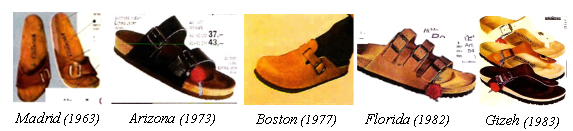
This decision represents an important milestone, confirming that even products traditionally regarded as purely functional may qualify as works of applied art.
Against the backdrop of Vietnamese law, a practical question arises: Can a pair of sandals, a handbag, or a perfume bottle – typically regarded as industrial design subject matter – also receive copyright protection as works of applied art under Vietnam’s Intellectual Property Law and Article 6.8 of Circular No. 17/2023/TT-BVHTTDL? This is not merely a theoretical question. It is a strategic consideration with significant implications for intellectual property protection. Industrial design rights are subject to a limited protection term (up to 15 years) and strict novelty requirements. Copyright, by contrast, arises automatically upon fixation of the work and generally enjoys a longer duration of protection, thereby providing businesses with a more sustainable layer of legal protection.
Can Useful Articles Be Protected by Copyright in Vietnam?
To answer whether sandals, handbags, or perfume bottles may qualify as copyright-protected works of applied art in Vietnam, one must begin with the applicable legal definition. Article 6.8 of Circular No. 17/2023/TT-BVHTTDL establishes a set of criteria for works of applied art, including:
- Form of Expression: The work must be expressed through lines, colors, shapes, forms, or composition;
- Utility Requirement: The work must possess utilitarian functions and may be incorporated into useful articles manufactured either manually or industrially;
- Scope of Subject Matter: The category includes graphic designs (packaging, brand identity systems, characters), artistic product designs, fashion designs, interior and exterior designs, and similar creations;
- Creativity Standard: “The work must be embodied in the artistic design of a product and “cannot be easily created by a person with average knowledge in the relevant field.”;
- Exclusion Criterion: “Protection does not extend to external product features that are indispensable for the performance of the product’s function.”
From Birkenstock to Vietnamese Law: Similar Protection Rationales — From “Originality” (Netherlands) to “Not Easily Created” (Vietnam)
A comparison between the principles applied by the Dutch court in Birkenstock and Vietnamese regulations reveals notable similarities in legal reasoning:
- Subject Matter Eligibility: Both legal systems acknowledge that functional products or useful articles (such as sandals, handbags, and bottles) may qualify for copyright protection, provided that their visual appearance – lines, shapes, forms, and composition – extends beyond what is minimally required by function. Under Dutch and EU law, this requirement is articulated through concepts such as “the author’s own intellectual creation” and “free and creative choices.” Under Vietnamese law, it is reflected in the criterion that the product design “cannot be easily created by a person with average knowledge in the relevant field”.
- Functional Exclusion Principle: Both systems exclude design features entirely dictated by technical function. The Dutch court described such features as elements so heavily constrained by technical considerations that the idea effectively merges with its expression. Similarly, Circular 17/2023 expressly excludes external product features that are mandatory for performing the product’s function”.
- Assessment Methodology: Both jurisdictions emphasize that originality and creativity must be assessed based on the overall appearance of the design rather than requiring each individual element to be independently novel. The protected value lies in how the designer combines various elements to create a distinctive overall visual impression – a gestalt that differs from the pre-existing design heritage.
In essence, despite differences in terminology, both legal systems share the same underlying principle: copyright protection for functional products is available only when the design transcends technical constraints and embodies the designer’s individual creative expression.
What Criteria Determine Copyright Protection for Useful Articles?
The foregoing analysis suggests that, in principle, sandals, handbags, and perfume bottles may qualify as works of applied art in Vietnam if – and only if – they satisfy the following three key criteria:
Criterion 1: Artistic Product Design Beyond a Functionally Determined Solution
A useful article may qualify for copyright protection only if its appearance goes beyond the single solution dictated by technical necessity. Businesses should therefore ask: Is the design the only possible way to achieve the product’s function, or merely one of many available design alternatives?
- Low likelihood of protection: A basic sandal whose features are solely intended to satisfy minimal functional requirements – walking comfort, foot support, and cost efficiency – may struggle to demonstrate artistic expression.
- Potentially protectable design: Birkenstock deliberately departed from prevailing industry norms by adopting flat footbeds instead of curved ones, wide toe areas rather than narrow shapes, exposed cork materials, straight edges, and wave-like sole contours. These were aesthetic choices rather than inevitable functional outcomes.
Under Vietnamese law, the phrase “cannot be easily created by a person with average knowledge” serves as the benchmark for this criterion. If an ordinary designer would not readily arrive at the same design because it reflects a distinctive artistic concept, the design approaches the protectable territory of a work of applied art.
However, this also represents the most legally uncertain area. It may be argued that Article 6.8 effectively borrows the “inventive step” standard from patent law and applies it to copyright. While international copyright norms generally require only originality – that the work originates from the author and is not copied – Vietnam imposes the additional requirement that the work must not be easily created.”
This divergence in legal standards creates a significant risk for contemporary minimalist design, where creative expression often lies in restraint and simplicity rather than ornamental complexity. In the case of Birkenstock’s minimalist creations – such as the Madrid sandal, consisting of a single strap and a flat sole – an examiner or court in Vietnam could readily adopt the intuitive view that “an ordinary shoemaker (i.e., a person with average knowledge in the field) could easily cut a rectangular piece of leather and attach it to a sole”.
As a consequence, if Article 6.8 of Circular No. 17/2023/TT-BVHTTDL is applied in a rigid or overly literal manner, Birkenstock’s minimalist designs could face a real risk of being denied copyright protection in Vietnam on the ground that they are “easily created.” This outcome would stand in sharp contrast to the Dutch court’s approach, which regarded those same design features as the product of deliberate artistic choices and therefore deserving of copyright protection.
Criterion 2: A Distinctive Design Language Through the Combination of Shapes, Lines, and Colors
Assessment should focus not on isolated details but on the overall visual composition created by the interaction of shapes, lines, colors, and forms.
- Sandals: sole shape, edge treatment, strap architecture, material exposure, and decorative style.
- Handbags: silhouette, handle structure, flap configuration, stitching, metallic elements, panel arrangement, and color blocking.
- Perfume Bottles: bottle geometry, glass thickness, cap design, logo placement, liquid coloration, and light-refraction effects.
If the combination of these elements produces a distinctive appearance that differs significantly from the prevailing designs available in the marketplace at the relevant time, the design may qualify as a work of applied art. In other words, copyright protection is determined by the originality of the creative combination rather than by the novelty of individual elements.
Criterion 3: Does not fall under the “functional requirements” section as per Clause 6.8
One of the key obstacles that businesses need to pay particular attention to is found at the end of Article 6.8 of Circular 17/2023/TT-BVHTTDL: “excluding the external design of the product that is essential to performing the product’s function.” In other words, copyright only protects the aesthetic design, not the formal elements that are an inevitable consequence of the technical function.
- Sandals: The sole, toe, and heel must meet minimum requirements to ensure comfortable walking – this is a mandatory technical requirement. However, the handling of edges, seams, thickness, whether materials are exposed or concealed, strap structure, and decorative style (or a minimalist, undecorated option) are areas of creativity where authorship can arise.
- Handbags: The basic function is to hold and carry. But the form can vary – box, cylindrical, half-moon, baguette…; along with the design of the straps, flaps, clasps, seams, logos – all are areas of creative freedom, not constrained by function.
- Perfume Bottles: The neck of the bottle must fit the spray nozzle – that’s a technical requirement. However, the choice of shape – square, cylindrical, twisted, creating “bottle shoulders,” rounded corners, or sculpted designs.
The key legal approach is to clearly separate the two layers:
- Technical layer – elements that are indispensable for the product to perform its intended function.
- Aesthetic layer – creative choices reflecting the designer’s artistic judgment and personal expression.
Copyright protection for works of applied art can only subsist in the latter.
How Can Businesses Effectively Protect Useful Articles?
Based on the above analysis, several practical courses of action can be drawn for businesses in the Vietnamese market.
[1] Adopt a Dual Protection Strategy.
Businesses should not rely solely on industrial design protection mechanisms. For key products with distinctive, iconic designs, two steps should be implemented simultaneously:
- File industrial design applications as soon as products enter the market to secure novelty and priority rights; and.
- Develop supporting documentation for copyright protection as works of applied art.
Reason: Industrial design rights have a limited term (maximum 15 years) and can be revoked if they lose their novelty. Meanwhile, copyright has a longer protection period, arises as soon as the work is created, and is not entirely dependent on the registration process (although registration is still encouraged to increase evidentiary value). In other words, copyright is a second layer of protection that helps businesses maintain a competitive advantage and protect their creative value more sustainably.
[2] Maintain Comprehensive Evidence of Creativity
To overcome the legal hurdle of the “not easily created” criterion under Circular 17/2023/TT-BVHTTDL, businesses need to proactively build and maintain creative documentation to demonstrate the intellectual labor involved in the design process. This documentation may include:
- Hand sketches or preliminary 3D drawings represent the initial ideation stage.
- A moodboard, a record of brainstorming sessions, shows the source of inspiration and creative direction.
- The design options were eliminated to demonstrate that the author had considered many choices and made a deliberate aesthetic decision.
The preservation of this evidence helps prove that the product is not a trivial variation, but the result of a genuine creative process, meeting the criteria for protection of applied art works. This is also an important basis for businesses to protect their rights in the event of disputes or legal assessments.
[3] Develop a Strategic Rights Establishment and Enforcement Framework
Lessons from the Dutch court show that the key to winning a case lies not in denying the product’s functionality, but in demonstrating “freedom of creative expression.” Lawyers or businesses need to clarify that: To achieve the same function, there are thousands of different design approaches, and the current design is a personal aesthetic choice of the author, not a forced technical outcome.
During litigation, businesses shouldn’t simply rely on the general argument that “the counterfeit goods look like the real thing.” Instead, they need to build a compelling narrative, similar to how Birkenstock handled the Scapino case. This approach includes:
- Identifying the product’s core design DNA: clearly indicate which are the most important identifying characteristics of the product, such as form, structure, and distinctive details.
- Demonstrating the uniqueness of the overall combination of elements: explain why this combination creates a distinct look, different from the prevailing “design heritage” on the market at the time.
- Copying behavior analysis: indicates that the infringing party did not merely randomly duplicate a few details, but copied the entire design language – that is, the way elements are combined to create the aesthetic identity of the product.
By systematically telling the story of its creation, a business will reinforce the argument that its product is the result of a genuine creative process, and that the infringement is an unauthorized appropriation of protected aesthetic value.
[4] Localize Protection Strategies for Foreign Investors: Foreign investors operating in Vietnam should avoid assuming that legal standards developed in Europe or the United States will apply identically in Vietnam. Instead, they should tailor their protection and enforcement strategies to local legal requirements, particularly the standards embodied in Article 6.8 of Circular 17/2023/TT-BVHTTDL. Preparing comparative analyses against existing products available in the Vietnamese market can be instrumental in demonstrating originality and distinctiveness
Conclusion
From the Birkenstock v. Scapino case in the Netherlands, as well as the Paris Court of Justice (France) recognizing Hermès’ “Kelly” and “Birkin” handbags as “works” under copyright law, when looking at the Vietnamese context, it can be affirmed that useful items such as sandals, handbags, or perfume bottles are entirely capable of being recognized as “applied art works” under Vietnamese intellectual property law.
However, the boundaries of protection do not lie in the function itself, but in the fact that the design must be the result of free aesthetic choices, bearing a unique creative imprint, transcending the minimum imposed by functionality – and, importantly, cannot be easily created by someone with average knowledge in the relevant field. Businesses that quickly identify and exploit the “copyright layer” inherent in their useful products will enjoy a significant competitive advantage in the marketplace.
With more than 15 years of experience in intellectual property law, KENFOX IP & Law Office assists businesses in developing comprehensive protection strategies for industrial designs and works of applied art. Our services extend beyond registration and enforcement to include the identification, documentation, and evidentiary substantiation of the core creative elements that distinguish a design from its competitors. By integrating industrial design, copyright, and litigation strategies, we help clients maximize the value of their design assets and strengthen their position in infringement disputes.
QUAN, Nguyen Vu | Partner, IP Attorney
PHAN, Do Thi | Special Counsel
HONG, Hoang Thi Tuyet | Senior Trademark Attorney
Related Articles:
- Beyond First-to-File: How Copyright Won a Trademark Battle in Vietnam?
- Bad-Faith Trademark Filings in Vietnam: What’s new in the IP Law 2025?
- How to Overcome Trademark Refusal for Genericness or Descriptiveness in Myanmar?
- Trademark Refusal in Vietnam: What Strategy Enabled the “Three-Circle” Mark to Overcome a Likelihood-of-Confusion Objection?
- Cancelling a Trademark Registration in Bad Faith in Vietnam: What a Genuine Trademark Owner Needs to Do?
- Trademark Examination Processes in Vietnam: Why You Need to Monitor Every Step to Avoid Costly Delays
- Addressing IP disputes in Vietnam: Declarations of non-infringement and invalidity
- “Bad Faith”, “Conflict of Rights”, and “IP Abuse” in Vietnam: What Lessons Can Be Drawn from the “Foellie” Trademark Dispute?
- Trademark Use in Vietnam: How to Correctly Understand and Effectively Rebut Non-Use Cancellation Attacks
- “Bad Faith”, “Conflict of Rights”, and “IP Abuse” in Vietnam: What Lessons Can Be Drawn from the “Foellie” Trademark Dispute?