






Cassation Protest in the Binh Minh Plastics Case: Restoring the Value of Expert Evidence in Trademark Dispute Resolution
On March 9, 2026, the intellectual property (IP) dispute between Binh Minh Plastics Joint Stock Company and Binh Minh Viet Plastics Joint Stock Company marked a significant procedural turning point: the Supreme People’s Procuracy officially issued a Cassation Protest. This decision recommends the annulment of both the first-instance judgment of the People’s Court of Ho Chi Minh City and the appellate judgment of the High People’s Court in Ho Chi Minh City.
Over the past period, this case has been considered a typical “bottleneck,” exposing the unpredictability and latent risks within Vietnam’s IP litigation system. Previously, despite holding the most robust system of administrative and expert evidence, the rights holder could still be left empty-handed when the scientific foundation was dismissed by the adjudicating bodies and replaced with subjective, one-sided assessments.
The crucial new development lies not merely in the case being “protested” in a strictly procedural sense, but in the fact that the Supreme People’s Procuracy has publicly contradicted the assessment of both court levels, arguing that the first-instance and appellate judgments failed to rely on the conclusions of the expert agency, thereby severely affecting the legitimate rights and interests of the plaintiff. The Supreme People’s Procuracy has proposed that the Justices Council of the Supreme People’s Court annul both judgments for a retrial; simultaneously emphasizing that the signs “NHỰA BÌNH MINH VIỆT”, “BVM NHỰA BÌNH MINH VIỆT,” and the use of these signs on plastic pipes, signboards, and business vehicles must be examined in correlation with the protected trademarks of Binh Minh Plastics.
In other words, this protest not only opens up the hope of reversing the situation for a specific case but also partially alleviates the frustrations and concerns that have been smoldering in the business community recently: that the expert voice in trademark disputes cannot be relegated to a secondary position, and that the assessment of infringing elements cannot stop at “surface-level” formal differences while ignoring the commercial nature and the likelihood of confusion of the disputed signs. This is precisely why the new move from the Supreme People’s Procuracy should be viewed not only as a procedural turning point but as a notable signal regarding the re-establishment of standardization in evidence assessment and the sanctity of expert evidence in the IP judicial landscape in Vietnam.
Case Background
Plaintiff: Binh Minh Plastics Joint Stock Company (established 1977), the proprietor of well-known trademarks including “ỐNG NHỰA BÌNH MINH”, and the logos logo “ ” and “
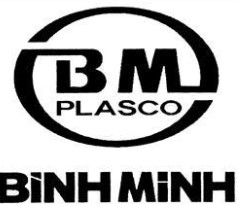 ”.
”.
Defendant: Binh Minh Viet Plastics Joint Stock Company (established 2025), utilizing the signs “BÌNH MINH VIỆT”, “NHỰA BÌNH MINH VIỆT” ( ), and the “BVM” logo (
 ) on PVC pipes, packaging, and signage.
Actions Taken by the Rightsholder: Binh Minh Plastics has established a comprehensive body of evidence, comprising:
- Expert Assessment: Four (04) Conclusion Certificates issued by the Vietnam Intellectual Property Research Institute (VIPRI) affirming that the Defendant’s signs constitute elements of trademark infringement.
- Administrative Enforcement: The Directorate of Market Surveillance conducted inspections, seized products, and issued administrative sanctioning decisions against the Defendant’s distributors.
- Ministerial Findings: The Inspectorate of the Ministry of Science and Technology (MoST) concluded that infringing acts had occurred; the Ho Chi Minh City Department of Planning and Investment subsequently ordered the Defendant to change its corporate name to remove the word “Binh Minh.”
Procedural History: However, during the first-instance trial, the Trial Panel ruled that visual differences existed in the logo presentation and deemed the expert assessment conclusions to be “for reference only.” Despite the Plaintiff’s appeal, the Appellate Court (the High People’s Court in Ho Chi Minh City) upheld the first-instance judgment, disregarding the Plaintiff’s grounds for appeal.
These contradictory rulings have set a controversial precedent, prompting a Decision to Protest under Cassation Procedures by the Supreme People’s Procuracy.
Key Arguments in the Cassation Protest of the Supreme People’s Procuracy
The Cassation Protest of the Supreme People’s Procuracy directly identifies serious shortcomings in evidence assessment by the two preceding trial courts, specifically:
- Disregarding the system of expert evidence: The most notable aspect of the Supreme People’s Procuracy’s protest lies not only in the recommendation to annul both judgments but in the very rationale for this annulment. Accordingly, the Supreme People’s Procuracy argues that the two courts’ failure to rely on the conclusions of expert agencies—comprising four expert assessment conclusions from the Vietnam Intellectual Property Research Institute and an assessment document from the Intellectual Property Office of Vietnam—to subsequently dismiss the plaintiff’s lawsuit is unfounded and has severely impacted the legitimate rights and interests of the rights holder. The focal point of this protest, therefore, is not merely an attempt to reverse a disadvantageous procedural outcome for Binh Minh Plastics. More importantly, it directly refutes an adjudicative mindset that previously caused significant concern among professionals: the tendency to downgrade leading scientific assessments and administrative decisions into inconsequential “reference materials.” This straightforward approach by the Supreme People’s Procuracy brings tremendous relief, as it strikes at a persistent underlying concern: if the most solid legal basis, the expert assessment conclusion, can still be relegated to a secondary position in court, what can rights holders realistically expect from the IP enforcement mechanism in Vietnam?
- Principles of infringement assessment: Secondly, the protest demonstrates that the Supreme People’s Procuracy does not view the case as a purely formal dispute between two logos or two methods of brand presentation, but rather focuses on the nature of the infringing sign and the overall likelihood of confusion. The expert agency analyzed that in the phrase “NHỰA BÌNH MINH VIỆT”, the element “Nhựa” (Plastics) is merely descriptive of the material or the nature of the goods, the element “Việt” possesses weak distinctiveness, whereas “BÌNH MINH” is the component that creates the strongest visual impression and is identical to the protected element. Should the Justices Council seriously consider this approach in the future, the case could become a vital practical milestone, reaffirming the principle that the evaluation of an infringing sign must stem from the dominant cognitive component, rather than merely from minor differences in formal presentation.
- One-sided assessment of the scale of infringement: Thirdly, the protest reflects an essential mindset regarding evidence in the modern business environment. The Supreme People’s Procuracy asserts that the appellate court’s finding—that the defendant merely test-produced 50 plastic pipes—is incomplete, as bailiff’s acts (vi bằng) have recorded the products being offered for sale on websites and Facebook. This detail illustrates that in contemporary trademark disputes, offering goods for sale in the digital environment, promotion on social networks, corporate websites, and visual identity on digital media platforms can all serve as critical evidence for evaluating the actual extent of the infringing acts, the scope of consumer reach, and the risk of confusion in the market.
What is the True Nature of this Dispute: Formal Differences or the Likelihood of Confusion Regarding Commercial Origin?
One point that must be acknowledged directly is that this case should not be reduced to a mechanical comparison between the BM and BVM logos, or between details such as layout, typography, color, or display size. In trademark law, the core question is not “are the two signs identical,” but rather: Does the use of the challenged sign cause the relevant public to misunderstand or falsely associate the commercial origin of the goods?
Therefore, in a dispute like the Binh Minh Plastics case, the assessment must be placed within a comprehensive context comprising multiple factors: the degree of similarity between the signs; which component is the primary, cognitive-dominating element; the degree of similarity of the goods; the actual context of use on products, signboards, websites, and social networks; the level of recognition of the prior mark; distribution channels; the target customer group; and even how actual consumers might encounter the product in the market. Overemphasizing surface-level formal differences while mitigating the role of the word element “BÌNH MINH” on the exact type of product the plaintiff has traded in for a long time inevitably leads to fierce legal debate. The reaction of the Supreme People’s Procuracy demonstrates that such a perspective is no longer merely an academic viewpoint but has entered the focal point of procedural debate at the highest level.
From this angle, the protest also indirectly revives a crucial principle in evaluating trademark infringement: not all constituent elements of a sign carry equal weight. Descriptive components, weakly distinctive elements, or supplementary parts that are insufficiently strong to alter the overall commercial impression generally cannot be used as a “shield” to completely neutralize the risk of confusion, especially when the core component of the prior mark remains clearly present in the challenged sign. This is a point that businesses need to pay special attention to when developing strategies for naming, label design, and selecting commercial signs.
What is the Value of Expert Assessment Conclusions and Administrative Sanction Decisions in Court?
The court adjudicates independently and has full authority to evaluate evidence. However, this independence does not equate to the ability to arbitrarily dismiss specialized documents, relegating them to the level of “merely for reference,” without providing convincing explanations.
In IP disputes, particularly trademark disputes, expert assessment conclusions from specialized agencies hold special value because they reflect a technical and specialized approach to issues such as distinctiveness, cognitive-dominating elements, the degree of similarity, and the likelihood of confusion. Similarly, the administrative sanction decision of an enforcement agency, while not a substitute for a judicial ruling, still reflects the results of a practical review, verification, and application of the law within a specific market context. If the adjudicating body disagrees with those conclusions or decisions, then in terms of procedural logic, it is essential not merely to declare them as having “only reference value,” but to persuasively explain why that expert assessment is inappropriate, or, when necessary, to consider a mechanism for reassessment, solicitation, and cross-checking using a methodology of commensurate reliability.
The Cassation Protest of the Supreme People’s Procuracy has affirmed an important message: If the gap between expert assessment, administrative enforcement, and civil adjudication is widened too far, it will create significant risks for the predictability of the IP rights enforcement system. When businesses cannot estimate the true weight of specialized evidence in court, they will face a very high degree of uncertainty, even after investing substantially in evidence collection and rights enforcement activities.
What Message Does This Protest Send to Businesses?
- First, establishing a multi-layered “rights ecosystem”: Registering a core trademark is insufficient. To combat the epidemic of “commercial parasitism,” businesses need defensive registration: word marks, combined marks, logos, slogans, packaging designs, and even applied copyrights. The denser the rights system, the more robust the legal barrier. The dispute between Binh Minh Plastics and Binh Minh Viet Plastics is a prime example demonstrating that when a party constructs multiple layers of legal “shields,” the battle will not be fought on a single front.
- Second, not relying on a single type of evidence but building comprehensive evidence: Do not depend on a single document. When initiating a lawsuit, the dossier must encompass: evidence of trademark reputation, history of use, expert assessment conclusions, administrative decisions, and especially a system of bailiff’s acts establishing the infringing acts in both physical space and the digital environment.
- Third, IP litigation always carries a high degree of uncertainty. This cassation protest proves that an effective judgment can still be challenged if the competent authority finds that the evaluation of evidence or application of the law contains serious flaws. Businesses must therefore be mentally prepared to pursue the case over a prolonged period, with a sufficiently enduring budget, communication strategy, and evidence strategy.
- Finally, rights enforcement must be accompanied by long-term strategic thinking. Not every case should be viewed solely through the lens of “winning or losing” at a specific moment of adjudication. In certain cases, the greatest value lies in the business clearly demonstrating its stance on brand protection, deterring negative signals from the market, and creating a precedent of warning for entities intending to “free-ride” or exploit the fame of a well-established brand.
Conclusion
Regardless of the subsequent cassation outcome, the developments on March 9, 2026, have significantly altered the perspective on the Binh Minh Plastics case. If this case was previously viewed as evidence of the risk that expert assessment conclusions and administrative sanction decisions could be marginalized in the courtroom, the new protest by the Supreme People’s Procuracy demonstrates that the expert voice has not lost its value. Conversely, it is being restored to its rightful place in the legal debate regarding how to determine infringing elements and assess the likelihood of confusion in trademark disputes.
The case also sends a powerful message to the business community: In the context of increasingly sophisticated “commercial parasitism,” brand protection is no longer a matter of simply possessing a Trademark Registration Certificate. What is more essential is an overall strategy comprising multi-layered protection registration, regular market surveillance, systematic evidence collection, flexible utilization of administrative and civil measures, while concurrently preparing for complex legal debates on the value of expert evidence in court. Only then will IP rights truly become an instrument to protect the market, safeguard corporate reputation, and secure consumer trust.
QUAN, Nguyen Vu | Partner, IP Attorney
PHAN, Do Thi | Special Counsel
HONG, Hoang Thi Tuyet | Senior Trademark Attorney
Related Articles:
- Binh Minh vs Binh Minh Viet: What valuable observations can be made ?
- The Secret Behind the Assessment Conclusion of VIPRI: 5 Questions That Cannot Be Ignored
- Expertise opinions/IP assessment in IPR enforcement proceedings in Vietnam and several notable obstacles
- Protecting your IPR in Vietnam – A Guide to VIPRI’s Services and Expertise
- Key takeaways from the recent trademark assessment conclusion issued by the Vietnam Intellectual Property Research Institute
- Do You Really Understand The VIPRI Opinion On Enforcing IP Rights In Vietnam
- Claiming damages in IPR lawsuits in Vietnam – Key takeaways
- Should you abandon a trademark application temporarily refused registration in Vietnam?
- Facing a Trademark Refusal in Vietnam? Learn How to Appeal and Win
- How Did Philipp Plein Appeal a Decision on Trademark Refusal in Vietnam?
- Overcoming the IP Vietnam’s refusal, appeal against the IP Vietnam’s refusal decision
- Trademark Oppositions In Vietnam: What Grounds And How To Effectively Apply?
- Overcome a provisional refusal against an International Registration Designating Vietnam – difficult but never give up!
- Trademark Law in Vietnam: A Comprehensive Overview
- Overcoming the IP Vietnam’s refusal, appeal against the IP Vietnam’s refusal decision