






Opposition Against the Trademark “7 DAYZ” / “7 DAYS PREMIUM MENWEAR & Device”: 5 Lessons in Trademark Protection in Vietnam
In intellectual property portfolio management, challenging a subsequent trademark application that “borrows” ideas while being disguised by stylized details remains a complex issue. Therefore, protecting brand identity extends beyond mere name registration; it is a strategic battle to safeguard the “zone of recognition” within the minds of consumers. In this context, the successful prevention of trademark application No. 4-2023-36026 demonstrates a crucial principle: an effective opposition dossier must be built upon a strict integration of legal analysis regarding the similarity of the signs and designated goods/services, alongside a practical assessment of how the brand is perceived, recalled, and competes in the market.
Background
PARKSON PRIVATE LABEL SDN BHD (PARKSON) is a subsidiary of the Lion Group (Malaysia), operating in the distribution and retail of fashion merchandise, while concurrently providing specialized design services.
In 2018, PARKSON filed trademark application No. 4-2018-35908 (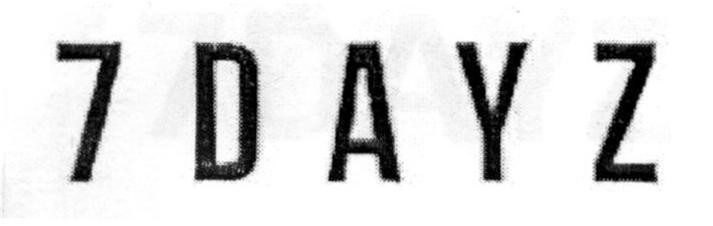 ), seeking protection for goods and services in Classes 03, 14, 20, 25, and 35 – including apparel-related products under Class 25 and relevant retail, advertising, and business management services under Class 35.
A third party, Duong Thanh Quang, subsequently filed trademark application No. 4-2023-36026 ( ), comprising a stylized numeral “7” combined with the literal element “DAYZ” and the supplementary phrase “PREMIUM MENWEAR” positioned below. This application sought registration for goods and services in Classes 25 and 35 – including clothing, footwear, headgear, belts, ties, socks, as well as retail promotion and online advertising services. The emergence of a subsequent sign within the same commercial sector, covering goods and services that are identical or closely related to those of the prior application, gave rise to a clear legal conflict: not only concerning the establishment of priority rights but also regarding the likelihood of confusion among consumers.
In response to this risk, on March 27, 2024, Notice of Opposition No. PĐ4-2024-00266 was filed with the Intellectual Property Office of Vietnam (IP Viet Nam), requesting the refusal of protection for application No. 4-2023-36026. The opposition arguments were established on two pivotal legal grounds:
- First, Likelihood of Confusion: The subsequently filed sign is deemed confusingly similar to the prior trademark when evaluated on its overall structure, phonetic pronunciation, visual representation, and the scope of the designated goods and services. Consequently, it fails to satisfy the conditions for protection stipulated under the Intellectual Property Law of Vietnam.
- Second, The First-to-File Principle: The trademark under application No. 4-2018-35908 was filed in 2018, significantly earlier than application No. 4-2023-36026, which was filed in 2023. Therefore, pursuant to the “first-to-file” principle articulated in Article 90.2 of the Intellectual Property Law, the subsequent sign is ineligible for protection due to its conflict with the priority rights arising from the prior application.
Outcome
On March 4, 2026, the Intellectual Property Office of Vietnam (IP Viet Nam) issued Notification No. 29094/SHTT-NH, accepting the opposition filed by KENFOX on behalf of PARKSON PRIVATE LABEL SDN BHD, and declaring its intention to refuse protection for trademark application No. 4-2023-36026.
Key Legal Takeaways
This case provides significant practical insights for rights holders who are building and protecting their brands in Vietnam.
1. The Filing Date is a Legal Advantage – Secure it from the Outset:
In Vietnam, the trademark registration system operates on the “first-to-file” principle. A prior-filed application – even if a certificate of registration has not yet been granted – can constitute a valid legal obstacle against a conflicting, subsequently filed trademark. This establishes a clear mandate: Enterprises must file their registration applications as soon as their brand strategy is determined, rather than waiting until the product is launched on the market.
2. Superficial Visual Alterations Do Not Create a Sufficient Legal Distinction:
The addition of stylized graphical elements, alterations in typography, or the inclusion of descriptive phrases such as “premium menswear” will not exempt a subsequently filed trademark from the risk of refusal if the core distinctive element – the component that establishes the commercial identity of the trademark – remains intact. The Intellectual Property Office of Vietnam (IP Viet Nam) evaluates similarity based on the overall impression, rather than a fragmented comparison of isolated details.
3. Trademark Opposition is a Proactive Tool, Not Merely a Defensive Measure:
Early intervention via the opposition procedure helps prevent problematic trademarks from being granted a certificate of registration – thereby preempting more complex and costly disputes at a later stage. Invalidation proceedings against a registered trademark are inherently more arduous and time-consuming compared to filing an opposition during the examination phase.
4. The Overlap of Goods/Services Must Be Analyzed from Both Legal and Commercial Perspectives:
Beyond a strict comparison under the Nice Classification, the examining authority also scrutinizes the actual, practical relationship between the goods and services – including overlapping distribution channels, target consumer demographics, and supply chains.
5. A Trademark Monitoring System is an Indispensable Component of a Protection Strategy:
This matter was addressed in a timely manner solely because the rights holder detected the conflicting application within the statutory opposition period. Enterprises must establish robust mechanisms to regularly monitor newly published trademark applications – particularly within the classes of goods and services directly related to their core business sectors.
QUAN, Nguyen Vu | Partner, IP Attorney
PHAN, Do Thi | Special Counsel
HONG, Hoang Thi Tuyet | Senior Trademark Attorney
Related Articles:
- Overcome a provisional refusal against an International Registration Designating Vietnam – difficult but never give up!
- MEGA MGC COFFEE: A “Reversal” Strategy and Lessons in Trademark Rights Establishment in Vietnam
- Trademark Law in Vietnam: A Comprehensive Overview
- Overcoming the IP Vietnam’s refusal, appeal against the IP Vietnam’s refusal decision
- Handling Trademark Infringement in Vietnam: 8 Key Considerations
- Bad Faith – The Secret to Proving Bad Faith and Regaining the Trademark in Vietnam
- How to Successfully Appeal a Trademark Refusal in Cambodia: 6 Essential Questions
- When New Facts Will Be Accepted for an IP Appeal in Vietnam?
- Protecting Unconventional Trademarks: Strategies for Businesses in Vietnam
- Gathering Convincing Evidence: The Key to Success in Protecting Non-Traditional Trademarks in Vietnam
- Color Trademark Litigation: Key Takeaways for Companies in Vietnam
- Should you abandon a trademark application temporarily refused registration in Vietnam?
- Facing a Trademark Refusal in Vietnam? Learn How to Appeal and Win
- How Did Philipp Plein Appeal a Decision on Trademark Refusal in Vietnam?
- Overcoming the IP Vietnam’s refusal, appeal against the IP Vietnam’s refusal decision
- Trademark Oppositions In Vietnam: What Grounds And How To Effectively Apply?
- What To Do if Your Trademark has been Stolen in Vietnam?