






From Europe to Vietnam – Three Questions for Determining the Copyright Eligibility of Functional Products as Works of Applied Art
[/vc_column_text]
In traditional legal thinking, functional products – ranging from sandals and handbags to perfume bottles – have generally been viewed as falling within the scope of industrial design protection rather than copyright. However, the judgment rendered on 12 November 2025 by the District Court of Midden –Nederland in Birkenstock v. Scapino (Case No. C/16/577582 / HA ZA 24-336) marks a significant turning point. The Court affirmed that even products commonly perceived as being primarily functional, such as sandals, may qualify for copyright protection where their appearance results from the designer’s free and creative choices and reflects the designer’s personal creative expression.
What makes the Dutch court’s judgment particularly noteworthy is not merely its affirmative conclusion, but the structured legal framework it establishes for resolving three fundamental issues: (i) what constitutes a “work“ in the context of functional products; (ii) where the boundary lies between technical functionality and creative aesthetic expression; and (iii) what criteria must be satisfied for a functional product to qualify as a copyright-protected work. This analytical framework provides valuable guidance for assessing the copyright eligibility of applied designs, particularly in cases where functional considerations coexist with creative design choices.
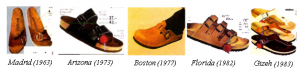
In the case, the plaintiffs – Birkenstock IP GmbH and Birkenstock Global Sales GmbH – sought recognition of copyright in five sandal models: Madrid (1963), Arizona (1973), Boston (1977), Florida (1982), and Gizeh (1983). They further alleged that the defendant, Scapino Retail B.V., had infringed those copyrights by marketing similar products under its private labels, including Bioslippers, Bio Life, Hush Puppies, and Thu!s.
The defendant, Scapino, contested the plaintiffs’ claims by arguing that the sandal designs were not eligible for copyright protection and, in any event, that no infringement had occurred. Scapino further relied on the doctrines of rechtsverwerking (loss or waiver of the right to enforce) and misbruik van recht (abuse of rights), invoking a settlement agreement previously concluded between the parties in 2015. With respect to the Gizeh sandal in particular, Scapino additionally argued that any copyright protection had expired because it was allegedly linked to an earlier Benelux registered design.
Ultimately, the Court recognized copyright protection for three sandal models – Madrid, Arizona, and Florida – and held that Scapino had infringed the copyrights subsisting in those designs. By contrast, the Boston model was found not to qualify as a copyright-protected work, while any copyright that may once have subsisted in the Gizeh model was held to have expired in 1998. Accordingly, the plaintiffs’ claims of literal copying in relation to both the Boston and Gizeh models were dismissed.

From this case, the Dutch court’s approach clearly demonstrates how the originality standard is applied to draw the boundary between functionality and creativity, thereby extending the scope of copyright protection to functional products that might otherwise be regarded as falling exclusively within the domain of industrial design protection.
1. What Constitutes a “Work” in the Context of Functional Products?
The Dutch Court’s point of departure was not the question, “How famous are Birkenstock’s sandals?” Rather, it asked a more fundamental question: Do these sandal designs qualify as “works” within the meaning of copyright law, notwithstanding that they are, first and foremost, utilitarian objects – consumer products with a clear functional purpose?
1.1. The EU Legal Framework: “Own Intellectual Creation” and the Originality Standard
The Dutch Court reiterated and directly applied the legal standard established by the Court of Justice of the European Union (CJEU) concerning the concept of a “work.”
- An object is eligible for copyright protection only if it constitutes an eigen intellectuele schepping (EIS)—that is, the author’s own intellectual creation.
- The work must reflect the author’s personality, as expressed through the author’s free and creative choices.
- Only those elements that genuinely embody the author’s creative expression fall within the scope of copyright protection.
Building upon this legal standard, the Court formulated what may be described as the originality standard. Under this approach, any subject matter – whether a painting, a piece of furniture, or a pair of sandals – must be assessed against the following criteria:
- Is the product the result of the author’s free and creative choices?
- Are those creative choices sufficient to produce a distinctive appearance that reflects the author’s personality or individual creative expression?
- Have purely functional elements – or elements so dictated by technical function that the idea and its expression merge – been excluded from the scope of copyright protection?
1.2. Functional Products: They May Still Qualify as “Works” If Sufficient Room for Creative Freedom Exists
Against this legal backdrop, the Court turned to the next question: Can functional products provide a sufficient basis to qualify as “works” for the purposes of copyright protection?
The Court answered this question unequivocally:
- Functional products – including consumer goods and industrial products – may still qualify for copyright protection, provided that they constitute the designer’s own intellectual creation.
- The fact that a product’s shape is influenced by its functional purpose does not, in itself, preclude copyright protection, provided that:
- Technical constraints do not completely eliminate the possibility of free creative choices; and
- There remains genuine room for creative design choices in shaping the product’s appearance.
Conversely, elements that are dictated by technical function alone, or so heavily constrained by it that there is effectively only one possible form of expression do not satisfy the requirement of originality. In such cases, the idea and its expression effectively merge, leaving no space for free creative choice. As a result, those elements fall outside the scope of copyright protection.
Significantly, the Court further emphasized an important point: even where individual elements are familiar or commonplace, a combination of those elements may still qualify as a copyright-protected “work” if the selection and arrangement reflect the author’s personal style and creative choices. Originality, therefore, may lie in the overall composition and design approach, rather than in each individual component considered in isolation.
1.3. From Footprints in the Sand to a Pair of Sandals: When Does Form Go Beyond Function?
The above reasoning was concretely operationalised by the Court in its analysis of Birkenstock’s orthopedic footbed (the inner sole of a shoe/sandal designed in accordance with the anatomical structure of the foot), which is regarded as the “heart” of the sandal models (paragraph 3.21).
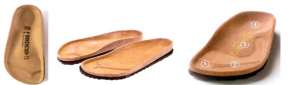
[A] (the author) used a footprint in the sand as inspiration for designing the footbed, featuring three distinctive characteristics:
- a heel cup,
- a raised arch support in the midfoot area,
- and a specially designed toe grip.
The defendant, Scapino, argued that all of these elements are merely technical solutions aimed at supporting the foot and therefore contain no creative expression. The Court rejected this argument and set out the key points as follows:
- Footprints in the sand are highly variable → the designer must make choices: which footprint to take as a reference, which features to treat as distinctive, and which to omit. This constitutes a series of creative choices, rather than a purely technical or automatic process.
- The “footprint in the sand” does not automatically become a sandal: in order to transform a “barefoot impression” into a concrete footbed, the author must still decide:
- the depth of the heel cup,
- the height of the arch support in the midfoot area,
- the shape, position, and prominence of the toe grip,
- and the way in which different planes and surfaces transition into one another….
These decisions are not the inevitable or solely functionally dictated outcome. They constitute choices of form and design, and thus fall within the realm of copyright-protected creative expression.
- The existence of a 1959 patent registered by [B] for a different type of insole – although serving the same purpose of supporting the foot – demonstrates that, for the same functional objective, designers can still arrive at significantly different formal solutions. In the Court’s words, this is strong evidence that function does not rigidly dictate form, and that there remains genuine space for aesthetic and creative choices.
The subtle message here is that: function does not extinguish creativity; only where form is so “frozen” by function that no other reasonably conceivable design is possible does that element fall outside the scope of copyright protection.
1.4. Combination of Design Elements: A “Work” Lies in the Overall Design Language
After establishing that a “creative space” can still exist beyond functional constraints, the Court turned to the overall design of Birkenstock’s sandals. In paragraphs 3.22–3.29, it proceeded with a step-by-step analysis:
- Flat sole, wide toe area, and straight side lines:
- At the time in 1963, the prevailing industry standard favoured designs in which the inner contour followed the shape of the foot and the outer contour was gently curved, creating a more streamlined and elegant appearance.
- Birkenstock deliberately departed from this norm: the sole is flat, the toe area is wide, and the side lines run straight from heel to toe without closely “hugging” the anatomical shape of the foot. This reflects a deliberate design choice, constituting a distinct “design language” rather than a structure dictated by functional necessity..
- Uncovered edges and exposed cork (paragraph 3.23):
- The defendant, Scapino, argued that this feature was merely a cost-saving measure.
- The Court expressly rejected this view, holding that cost considerations are not relevant criteria in assessing copyright protection.
- Against the prevailing trend at the time -where edges were typically carefully finished—the decision to leave the material exposed, creating a raw and “unfinished” aesthetic, was regarded as a stylistic choice that contributes to the overall artistic personality of the work..
- Wavy sole sidewall and the attachment of the upper (the entire upper part above the foot) (paras. 3.24, 3.26, 3.28):
- The sidewall of the sole is highest at the heel and gradually decreases toward the toe, rather than maintaining a uniform height, thereby creating an effect of “lightness” and a distinctive visual rhythm.
- The straps extend into the sole and visually disappear between the footbed and the sole; in the Arizona and Florida sandal models, the straps are even cut from a single piece of leather, integrated into the side structure before being embedded into the sole – departing from the conventional practice of separately attached straps.
- The defendant, Scapino, attempted to “technicalise” this feature by invoking the AGO manufacturing method. The Court rejected this argument, holding that AGO still allows for multiple design alternatives. The choice of this specific structure therefore reflects an aesthetic decision, not a technical necessity.
- Minimalist design – almost no ornamentation (paragraph 3.27):
- The defendant, Scapino, argued that the absence of decorative elements meant there were no creative choices involved.
- The Court rejected this argument, noting that if such a view were accepted, all minimalist designs in interior design, fashion, and other fields could never be protected by copyright -which would clearly be an unreasonable outcome.
- Accordingly, the deliberate choice to “add no decoration” and to keep the product in a stripped-down, minimal form is itself an aesthetic decision and an exercise of free creative choice.
Paragraph 3.29: The Court concluded that Birkenstock’s sandal models are protected by copyright not because each individual feature is novel in itself, but because of the unique combination of elements: the orthopedic footbed, flat sole/wide toe area/straight edges, exposed cork edges, wavy sidewall, the method of attaching the upper, and the minimalist design approach. Within the design landscape of the time, no existing model combined these features in the same way. In other words, the “work” character of a functional product lies in its overall design language, rather than in each isolated detail.
1.5. A General Standard for Functional Products
From the Court’s overall reasoning, a general standard can be derived for the question: “What constitutes a work in the case of functional products?”:
- Functional products are not automatically excluded from copyright protection;
- The protectable part will be:
- the aspects of form that are not dictated by technical necessity,
- where the author still has room for free creative choice,
- expressed through a combination of key design elements (lines, shapes, proportions, composition, material treatment, etc.),
- resulting in a distinctive appearance that reflects the designer’s personality within the existing design landscape.
On this basis, the Court was able to explain why the “Boston” sandal model was excluded from copyright protection, while the other sandal models (“Madrid”, “Arizona”, “Florida”) were recognised as “works”. With regard to the “Boston” sandal model, the Court found that the entire upper section (upper) is largely identical to the 1971 model, with the only fundamental difference being the removal of stitching, while other differences are minor and do not create a significantly different overall impression. The upper section is considered the decisive design element; the remaining elements are insufficient to “raise” the overall design to the level of a “work” (paras. 3.30–3.31). Therefore, the “Boston” sandal model does not meet the standard of originality. In contrast, the “Madrid”, “Arizona”, and “Florida” sandal models were recognised as works because the combination of their design elements, assessed against the existing design heritage, still conveys a distinctive appearance bearing the author’s personal imprint and is not rigidly dictated by technical function (paras. 3.21–3.29).
2. Where is the boundary between “technical function” and “aesthetic creativity”?
Một trong những đóng góp quan trọng nhất của phán quyết trong vụ Birkenstock kiện Scapino nằm ở chỗ: Tòa không chấp nhận quan điểm “đã các sản phẩm mang tính công năng thì chỉ là kỹ thuật”, nhưng cũng không “tuyệt đối hóa” mọi lựa chọn tạo hình. Thay vào đó, Tòa xây dựng một ranh giới tương đối rõ ràng giữa phần bị chức năng kỹ thuật chi phối và phần thuộc về sáng tạo thẩm mỹ.
One of the most significant contributions of the judgment in Birkenstock v. Scapino lies in the fact that the Court rejected the view that “functional products are purely technical in nature”, while also refusing to absolutise every design choice as creative. Instead, the Court established a relatively clear boundary between elements dictated by technical function and those belonging to aesthetic creativity.
2.1. Starting Principle: Technical Function Does Not Automatically Preclude Copyright Protection
After reiterating the “Eigen intellectuele schepping” (“own intellectual creation”) standard, the Court established a fundamental premise:
- The fact that a product’s shape is influenced by technical or functional considerations does not automatically exclude it from copyright protection.
- Only where a particular feature is dictated exclusively – or so overwhelmingly – by technical function that the idea and its expression merge does that feature fall outside the scope of copyright protection.
In other words, the Court recognised that every industrial product exists at the intersection of two worlds: technology and aesthetics. The relevant question is not “Whether the product has a function?”, but rathe: whether the technical function has completely “frozen” the product’s form. How much creative freedom remains for the designer to make aesthetic choices? This is the Court’s first guiding principle for drawing the boundary between technical function and aesthetic creativity.
2.2. The Orthopedic Footbed: A Test for Determining Whether Room for Creative Choice Still Exists
The Court’s analysis of the orthopedic footbed (paragraph 3.21) provides a textbook illustration of how it drew this boundary.
- From a functional perspective, Birkenstock’s footbed clearly serves an orthopedic purpose: it is designed to support the anatomical structure of the foot, enhance comfort, and distribute pressure.
- From a design perspective, however, the footbed is characterised by three distinctive features:
- a heel cup,
- a raised arch support in the midfoot area,
- and a specially designed toe grip at the front..
The defendant, Scapino, “technicalised” the entire design, arguing that these features are merely optimal technical solutions and therefore contain nothing eligible for copyright protection.
The Court responded with a highly nuanced chain of reasoning:
- Real footprints are highly diverse → function does not rigidly determine form
[A] drew inspiration from footprints in the sand. However, real human footprints in sand vary widely in depth, width, curvature, arch shape, and overall imprint…
- The designer must make choices: which type of footprint to use as a model, which characteristics to emphasise, and which to discard.
- These choices demonstrate that function does not “force” the designer into a single, predetermined form.
- From footprint to sandal: numerous shape decisions not dictated by technical necessity
The “footprint” is merely an initial idea. To transform it into a commercial product, [A] must continue making decisions regarding:
- how deep the heel cup should be,
- how high the arch support should be,
- whether the toe grip should be wide or narrow, and centrally aligned or offset,
- whether the transitions between concave and convex areas should be smooth or sharp,
- and how the overall form should appear from frontal and lateral perspectives.
These parameters are not strictly dictated by technical constraints but instead fall within the domain of aesthetic choice.
- The 1959 patent by [B]: same technical objective, significantly different form
The defendant, Scapino, submitted a 1959 patent by [B] concerning a different type of footbed. The Court used this document to reinforce its reasoning:
- both designs pursue the same functional objective of supporting the foot,
- yet [B]’s design exhibits a substantially different form compared to the footbed created by [A].
→ This demonstrates that a single technical purpose can be achieved through multiple different design solutions. Technical function does not “monopolise” a single shape.
From this, the Court derives an important message: function is only a starting point. As long as there are multiple design options available to achieve the same functional purpose, there remains a “free space” for aesthetic creativity – and it is precisely within this space that copyright protection may arise.
2.3. When “Technical” Arguments Are Deconstructed: AGO, Cost, and the Myth that “Cheap Means Non-Artistic”
The Court did not stop at the footbed. In paragraphs 3.23, 3.26, and 3.28, it repeatedly confronted attempts by the defendant, Scapino, to reframe design features as either “purely technical” or “merely cost-saving”.
(i) Uncovered edges and exposed cork – aesthetic feature or just “saving leather”?
The defendant, Scapino, argued that leaving the edges uncovered was simply a way to reduce material usage and labour costs, and therefore carried no creative significance.
The Court firmly rejected this argument:
- Reducing production costs is not a relevant criterion in assessing the originality of a work.
- The deliberate choice to expose the material and create a raw, unfinished appearance – at a time when prevailing design trends favoured clean, carefully finished edges – constitutes a conscious stylistic decision.
- Although design history (vormgevingserfgoed) shows that some “exposed material” designs had existed before, in the context of 1963 this choice still deviated sufficiently from industry norms and contributed to the distinctive visual identity of Birkenstock sandals.
(ii) Attachment of the sole and the “AGO shield”
Regarding the method of attaching the straps to the sole (paras. 3.26, 3.28), the defendant, Scapino, attempted to characterise this as a technical requirement of the AGO manufacturing process:
- Argument: because AGO is used, the straps must be attached in this specific way, leaving no room for aesthetic consideration.
The Court deconstructs this argument as follows:
- Birkenstock plausibly demonstrated that the AGO method does not limit designers to a single structural solution; in practice, numerous products using AGO still exhibit significantly different forms.
- The Court accepted that the exposed edge (resulting from the absence of covering) transforms what is usually a hidden construction detail into a deliberate design element: the straps extend into the sole and disappear between the footbed and the base. In the Arizona and Florida models, the straps are even cut from a single piece of leather, integrated along the side before visually “disappearing” into the sole.
→ Here, technique and aesthetics intersect, but the Court’s position is clear: this attachment method is not imposed by technical necessity, but rather reflects a distinct design choice that may be protected.
(iii) “No decoration” does not mean “no creativity”?
In paragraph 3.27, the defendant, Scapino, advanced a seemingly pragmatic argument:
- because Birkenstock sandals contain almost no stitching or decorative elements other than a rectangular buckle,
- “no decoration” equals no creative choices, and therefore the design cannot qualify as a work.
The Court rejected this reasoning:
- If this logic were accepted, all minimalist designs – now dominant in interior design, fashion, and industrial products – would be excluded from copyright protection, which is clearly untenable.
- The deliberate choice to keep the design stripped down, visually “clean,” and free of superfluous embellishment is itself a clear aesthetic decision.
Across these three examples, a stable pattern in the Court’s reasoning emerges: any attempt to reframe design features as purely technical, purely cost-driven, or purely minimalist will be dismantled where it ignores the presence of intentional aesthetic choice.
2.4. When does a shape “fall back” into the realm of technical function or prior design heritage?
To fully understand the boundary, it is necessary to also examine the cases where the Court refused copyright protection, most notably the “Boston” sandal model (paras. 3.30–3.31).
Here, the issue is not merely technical necessity, but rather the fact that prior design heritage has already exhausted the available creative space:
- Design evidence showed that a 1971 clog model had an upper section (the entire part covering the top of the foot) that is almost identical to the “Boston” sandal model.
- The only noticeable difference is the absence of stitching in the Boston model; other differences are minor and do not create a significantly different overall impression.
- The Court assessed that:
- the upper is the decisive design element of the Boston model;
- other features (such as the sole) are insufficient to “lift” the overall design to the level of a copyright-protected work, especially in light of the existence of a nearly identical prior design.
Therefore, the Boston model fails the originality threshold—not because it is “too technical,” but because its overall appearance does not depart sufficiently from existing design heritage. In other words, the space for creative expression has already been occupied by prior designs.
In contrast, the “Gizeh” sandal was not excluded for lack of originality, but due to a specific mechanism of Benelux law: where a design right had been registered but not properly maintained, and the design protection expired, the corresponding copyright protection was also considered to have lapsed (paras. 3.32–3.35). Here, the boundary is no longer between technical function and aesthetic creativity, but between different regimes of protection (design law vs. copyright law)—a separate doctrinal issue.
2.5. Consolidation into a principle: “function defines the boundaries, aesthetics fills the space”
From all the elements above, a governing principle can be derived for distinguishing technical function from aesthetic creativity in functional products:
- Technical function establishes a “minimum technical framework” – Certain lines, dimensions, and structural features are indispensable if the product is to perform its function. To the extent that such features are truly mandatory, they fall outside the scope of copyright protection.
- Within that framework, there remains a space for aesthetic choice:
- choosing one form over another,
- selecting one proportion over another,
- exposing or concealing materials,
- using curves or straight lines,
- adding decoration or deliberately omitting it.…
As long as these choices are not dictated by technical necessity, but instead reflect the designer’s aesthetic intent, they remain within the domain of copyright protection.
- However, where design heritage already saturates the field, protection may still be denied, Even if some design choices exist, a work may fail the originality threshold if the overall appearance is not sufficiently distinct from prior designs. The “Boston” sandal illustrates this point.
This approach enables the Dutch Court to both robustly protect Birkenstock’s distinctive design language (Madrid, Arizona, Florida) and maintain a coherent boundary with functional constraints and prior design heritage (Boston, Gizeh).
3. What criteria must be satisfied for a functional product to be considered a “work” eligible for copyright protection?
In the judgment of Birkenstock v. Scapino, these can be systematised into five core criteria used by the Dutch Court to determine whether a functional product may qualify for copyright protection, as follows:
Criterion 1 – Must be an “own intellectual creation” expressed through intentional design choices
The first foundational standard reaffirmed by the Court (paras. 3.13–3.14) is the EU doctrine that a work is protectable only if it constitutes an “Eigen intellectuele schepping” (EIS)—an “own intellectual creation” of the author. This criterion is satisfied when the following three requirements are met:
- the work reflects the author’s personality,
- through free and creative choices,
- and only those elements that genuinely express such creativity fall within the scope of protection.
This principle can be summarised as follows: a functional product is eligible for copyright protection only if its form results from the author’s free and creative design choices, reflecting a personal creative identity, rather than being dictated by technical patterns, professional conventions, or pre-existing design heritage.
In other words, instead of asking “Is this sandal absolutely new?”, the Court focuses on a more fundamental question:“Did the designer genuinely face multiple design options and make conscious choices—selecting, comparing, and excluding alternatives—or was the final form merely dictated by function and industry practice?”
To satisfy the “own intellectual creation” requirement, it must be shown that:
[i] There are personal design choices, not automatic outcomes of technical practice: The author must not merely apply a standard professional formula, but instead demonstrate personal input in selecting form, proportions, lines, and structure.In Birkenstock, the Court noted that for the footbed, [A] did not simply apply an existing orthopedic template. Instead, starting from the variability of real footprints in sand, the designer actively selected a model, extracted relevant features, and determined the heel cup depth, arch height, and toe grip shape and position (para. 3.21). This sequence of decisions reflects a clear exercise of authorship.
[ii] The designer deliberately adopts a stylistic approach rather than following industry inertia The EIS standard requires that the work reflect the author’s personality. This is particularly evident in Birkenstock’s departure from prevailing industry norms:
- In the 1960s footwear industry, the dominant aesthetic featured curved outlines following the foot, narrow toe shapes, and neatly finished edges (paras. 3.22–3.23).
- Birkenstock, by contrast, adopted a flat sole, wide toe box, straight edges, exposed cork, a wavy sole wall, and an intentionally minimalist, almost undecorated design (paras. 3.22–3.28). These choices were not dictated by technical necessity. They function as a design statement – a concrete expression of aesthetic personality
[iii] A stable and consistent “design language” can be identified throughout: An “own intellectual creation” is not confined to a single isolated feature, but is typically expressed through a coherent design language: recurring formal motifs, treatment of outlines, proportions, materials, and the degree of minimalism or ornamentation…
The Dutch Court shows that across the Madrid, Arizona, and Florida sandal models, there is a stable “design DNA”: a distinctive footbed, flat sole/wide toe box/straight edges, exposed cork edges, a wavy sole wall, a strap construction that “sinks” into the footbed between the insole and the sole, and an overall minimalist spirit. This deliberate repetition of design choices reinforces the conclusion that the products reflect a specific creative personality, rather than a set of fragmented or random shapes.
[iv] A clear distinction must be made between “skilled craftsmanship” and “own intellectual creation”: Not every well-designed, aesthetically appealing, or functional product automatically qualifies as an “own intellectual creation” (EIS). The essential point is that, within the resulting design, one must ask whether there is any aspect where, if the author were replaced by another designer with the same technical requirements and level of professional skill, they could reasonably have arrived at a different formal solution.
In Birkenstock, the Court held that the following choices:
- departing from the conventional curved sole and narrow toe box,
- exposing materials rather than concealing them,
- introducing a wavy rhythm to the sole wall,
- deliberately maintaining a minimalist design without any stitching or decorative elements,
are all decisions that another designer would not be required to replicate, even with the same level of skill. In other words, there is “room for personality”—and this constitutes the domain of EIS (own intellectual creation).
In summary, the “own intellectual creation” criterion for functional products can be understood as follows: the product’s form must result from a chain of conscious design choices, in which the author genuinely “speaks in their own design language,” rather than merely solving a technical problem through a standard formula. As long as the shape is simply the automatic outcome of function or professional convention, it remains outside the boundaries of copyright protection.
Criterion 2: There must be space for creative choice; the form must not be entirely dictated by technical function
This criterion addresses the question: in a functional product, does the shape still constitute a space for copyright protection, or has technical necessity already occupied all available form?
From the reasoning of the Dutch Court, this can be generalised as follows: a functional product is eligible for copyright protection only if its design still leaves a “space for choice” for the designer—meaning that, for the same technical function, multiple design solutions are possible, and the resulting form is not the only inevitable outcome of function.
Conversely, those elements whose form is fully “frozen” by technical requirements – where only one specific shape can achieve the function and any variation would compromise functionality – fall outside the scope of copyright protection.
To satisfy this criterion of “creative freedom space,” the following must be demonstrated:
[i] Technical function must not lead to a single inevitable form: To qualify for protection, it must be shown that for the same technical purpose (e.g. foot support, liquid containment, object protection), multiple alternative forms either already exist or are theoretically possible.
In Birkenstock, comparison between [A]’s footbed and [B]’s patented insole demonstrates that, despite sharing the same orthopedic function, their structures, contours, and shapes differ significantly. This directly refutes the defendant’s argument that “one function necessarily leads to one form”.
[ii] The design must involve choices that go beyond the minimum required for functionality: The designer does not merely solve the problem of making the product “work,” but makes additional decisions regarding depth, elevation, proportions, positioning, shapes, and transitions – transforming an abstract functional idea (such as a footprint or foot support concept) into a concrete form through a series of micro-decisions.
These decisions are not strictly required for functionality; rather, they represent the “margin of discretion” where aesthetic intent can be expressed. It is precisely this margin that forms the basis for recognising that the design goes beyond purely technical constraints
[iii] It must be possible to distinguish between the “technical core” and the “aesthetic space” within the same design, a design may simultaneously contain:
- a technical core, which is entirely dictated by functional requirements (e.g. necessary holes, load-bearing points, balance structures, etc.); and
- a discretionary creative zone, where the author is free to choose contours, curvature, proportions, surface treatment, rhythm of form, and the way components are connected, without affecting functionality.
The criterion of “creative freedom space” does not require the entire form to be detached from technical constraints; it only requires that the creative component is sufficiently clear and substantial to be identifiable as an aesthetic domain.
[iv] The existence of creative space must be demonstrated through design reality: The Dutch Court adopts a strongly empirical approach. It examines prior design heritage, alternative technical solutions serving the same purpose, and earlier patents. From this, it concludes: “Given the same orthopedic objective, designs can differ significantly → therefore, function cannot fully determine the form”.
In summary, the criterion of “the existence of creative choice space” means: The shape of a functional product must not be the inevitable and only possible outcome of its technical function. Only where the technical requirements do not force the designer into a single predetermined form – and where the designer has in fact made concrete design choices – can the remaining form be considered part of the domain of copyright protection.
Criterion 3: The work must reflect the “author’s personality” through concrete, intentional design choices
If Criterion 2 answers the question: “Is there still room for creativity in this design, or has function already occupied all available space?”, then Criterion 3 goes one step further: “What did the designer do with that available space—did they actually ‘speak’ through their own design language?”
Through the Dutch Court’s detailed analysis of each element of the Birkenstock sandal, this can be generalised into a concrete operational principle for functional products: a functional product satisfies this criterion (authorial personality) only if its form reflects a chain of conscious design choices, which another designer with the same functional objective could reasonably have made differently.
In other words, the Court is not looking for a “masterpiece of art,” but for traces of free aesthetic decision-making – where technical necessity does not dictate the outcome.
More specifically, a functional product (such as sandals, bags, perfume bottles, chairs, etc.) will typically satisfy the requirement of “reflecting the author’s personality through design choices” if the following can be demonstrated:
[i] The existence of design choices not dictated by technical necessity
- It must be shown that, for the same function, multiple design solutions are possible (e.g. curved sole or flat sole; covered edges or exposed material; uniform sole wall or wavy contour, etc.).
- The designer’s decision to choose option A (flat sole, wide toe box, straight edges) instead of option B (curved, foot-following sole) is therefore a stylistic choice, not the only possible result of functional requirements.
[ii] A consistent “design language” formed by a chain of choices
- It is not a set of isolated details, but a combination of multiple formal elements that consistently point toward a single stylistic direction: flat sole + wide toe box + straight edges; exposed cork with uncovered edges; wavy sole wall; distinctive strap integration; minimalist, non-decorative design, etc.
- Taken together, these features reveal a continuous aesthetic intent rather than a mere “technical assembly”.
[iii] A stylistic process of “selection and omission,” even in minimalism
- The designer does not leave the product in a random or neutral state, but deliberately departs from prevailing finishing standards (e.g. no edge covering, no concealment of cork, no decorative stitching). Instead, they intentionally preserve a raw, stripped-down, or reduced form.
- The Court’s implicit reasoning is: this is not “doing less,” but making a stylistic choice.”
[iv] A visible departure from the design norms of the time
- It does not need to be unprecedented in absolute historical terms, but within its specific historical and market context, the design must show a clear deviation from dominant trends, creating a recognisable identity within a crowded field of similar products.
- This is what allows the Court to conclude that the work is not merely a “standard technical solution,” but carries a distinct aesthetic signature.
[v] The ability to distinguish between “functional necessity” and “creative freedom”
- The Court accepts that certain elements are purely functional and therefore unprotectable. However, as long as there remains a sufficiently broad zone of creative freedom—where the designer can shape form, proportions, material exposure, vertical rhythm, thickness variations, or minimalist/expressive choices – copyright protection may still arise.
In summary, for functional products, the criterion of “reflecting the author’s personality” is satisfied when it can be shown that the product’s form results from a series of free, consistent, and intentional aesthetic choices, rather than being solely dictated by technical necessity.
Criterion 4 – Assessment based on the overall combination of key design elements, not isolated details
This criterion addresses the question: does the originality of a functional product lie in each individual element being novel, or in the way those elements are combined into a distinctive overall appearance?
From the Dutch Court’s approach in Birkenstock (and its exclusion of the “Boston” model), the Court effectively crystallises its reasoning into a key point: Birkenstock sandals satisfy the originality threshold not because each individual feature is new, but because of the way those features are combined into an overall design with a distinct visual identity.
Accordingly, the principle can be summarised as follows: for functional products, copyright protection does not depend on whether each individual element is absolutely new, but on whether the combination of core design features creates an overall impression that is distinct and reflects the author’s personality in light of existing design heritage at the time of creation.
In other words, what is protected is not “each screw or stitch,” but the overall design language—that is, the way individual elements are selected, arranged, and combined.
To satisfy this criterion for a functional product, it must be demonstrated that:
[i] There are several “core design elements” that define the product’s overall appearance:
The Court’s approach is very clear: instead of asking, step by step:
- “Is element A new?”
- “Has element B appeared before?”
- “Is element C original?”,
the Court focuses on the essence of copyright protection for applied artistic works, asking instead:
“Does the overall form – comprising the core elements and the way they are organised – create a distinct appearance that is sufficiently distinguishable from similar products on the market?”
This is particularly important because, in industrial design, almost every individual element has already existed somewhere – straight lines, curves, rounded edges, buckles, straps, soles, and so on. If absolute novelty were required for each component, virtually no product could ever qualify as a “work”.
[ii] It is precisely the combination of elements that produces distinctiveness within the design heritage: While individual elements may already exist, what matters is that no prior design combines them in the same structural configuration or aesthetic “formula” at the time of creation.
Originality therefore resides in the combination, not in isolated components.
[iii] The overall design must have a “dominant formal feature,” not a mechanical sum of parts: The Court does not count elements; it identifies which feature is dominant (for example, the upper part in the Boston sandal). The remaining elements must be capable of altering the overall impression, not merely acting as minor decorative additions.
If the dominant feature closely replicates an earlier design and the differences are marginal and cosmetic, the overall product does not reach the threshold of a “work” (as in the Boston case).
[iv] Comparison must always be made within the context of design heritage: The question is not abstractly “Has this element ever existed before?”, but rather: within the existing body of similar designs, does the product create a sufficiently distinct overall impression, or does it simply dissolve into the existing mass of known forms?
In Birkenstock, the Court found that the combination of design elements had no precedent within the vormgevingserfgoed at the time of creation, and therefore qualified as a work.
By contrast, in Boston, the overall combination was not sufficiently distinct from existing designs and therefore failed to meet the threshold.
In summary, the principle of “assessing the combination of essential design elements rather than isolated details” means: a functional product qualifies for copyright protection only where the combination of its core design features—rather than any individual element – produces an overall appearance that is distinctive and significantly different from the existing design heritage.
Criterion 5 – Evolving designs can still be protected, as long as they remain within the same “creative lineage” and have not been absorbed into design heritage
This criterion addresses a very practical question: when a product evolves through multiple generations (model 1, model 2, model 3…), does each successive version still retain space for copyright protection, or is all creativity already “consumed” by the original design?
From the Dutch Court’s reasoning (particularly regarding the Madrid “base model” and the subsequent Arizona and Florida “improved versions”), the following principle can be derived:
Where both the original and the improved versions are created by the same author, copyright is understood as a continuous creative flow. Improvements do not diminish or “subtract” the originality of earlier designs; rather, each new version may still qualify as a protected work, provided it introduces new creative choices built upon the existing foundation
In other words, an author does not “consume” their own creativity when developing successive product generations.
To determine whether an improved design of a functional product satisfies this criterion, the following aspects may be examined:
[i] The same “creative hand” behind both the original and the improved version: The original model (e.g. the Madrid sandal) and subsequent models (Arizona, Florida, etc.) are all created by the same designer ([A]). Legally, this means they stem from the same source of “own intellectual creation,” and although rights may be assigned or licensed along the chain of exploitation/enforcement, they can still be traced back to the same original author.
[ii] The original is already a work; the improved version continues by adding a new layer of creativity: The original already satisfies the criteria of a copyrightable work (a combination of original design elements). The improved versions do not merely replicate the original, but rather add, develop, and modify design elements (for example, the strap structure in the Arizona and Florida models) through identifiable and conscious creative choices. In this way, the “base layer” and the “new layer” together form the later work.
[iii] In assessing improvements, the Court does not “subtract” the originality of the author’s own earlier work: The Court does not apply an approach such as: “remove everything already present in the Madrid model and assess only the additions in the Arizona model to see if they are sufficiently original.” Instead, it views the Madrid model and the Arizona model as a layered design system created by the same author. The entire combined design remains within the protectable creative sphere. This is a crucial point: there is no mechanism of “self-deduction of creativity” when an author develops their own work further.
[iv] Practical consequence: rights holders may rely on both original and improved versions in enforcement: Birkenstock does not need to choose between relying on the Madrid footbed or the Arizona/Florida strap structure. It can rely on the design language of Madrid (footbed, sole, edges) together with the added elements in Arizona and Florida (integrated straps, construction logic) to argue infringement.
This is particularly important for functional products, which typically evolve through successive generations.
In summary, the principle that “improved designs may still be protected as works, even when created by the same author” means: when a designer incrementally develops their own product line, each generation—provided it contains new creative choices—may itself qualify for copyright protection as a whole, without having to exclude or discount the creativity already embodied in earlier versions.
Conclusion
Functional products are not excluded from copyright protection. A sandal, a handbag, or a perfume bottle if it satisfies the criteria of creative space, authorial personality, and a structured combination of design elements – may be recognised as a “work,” rather than merely a functional object or industrial design.
In the Vietnamese context, Article 6.8 of Circular 17/2023/TT-BVHTTDL imposes a stricter threshold, requiring that applied artistic works must not be “easily created by a person with average knowledge,” and excluding external shapes that are strictly dictated by functional requirements. Copyright protection for product design in Vietnam is therefore a valuable legal tool, but not an automatic one; businesses should not assume it is a universal “safety net” in all circumstances.
Nevertheless, from the Paris Court of Justice’s recognition of Hermès’ “Kelly” and “Birkin” bags as copyright-protected works, to the lessons from Birkenstock v. Scapino, a consistent guidance emerges: where a design possesses genuine aesthetic depth, its own creative narrative, and has been developed through sketches, option selection, and conceptual refinement, it is worth considering a copyright strategy alongside the traditional “triple protection” framework of industrial design, trademarks, and unfair competition.
In other words, instead of asking “Can functional products be protected by copyright?”, businesses should shift their mindset to: “Does this design qualify for entry into the copyright protection space – alongside other IP regimes?” and accordingly build a comprehensive protection strategy from the earliest stages of product development.
With 15 years of experience and a well-established position in intellectual property practice, KENFOX IP & Law Office deeply understands the legal challenges surrounding the protection and enforcement of applied design rights. We not only assist businesses in securing and registering industrial design and copyright protection, but also develop specialised advisory and litigation strategies focused on identifying and proving core creative elements – the key factor in effectively protecting design assets and maximising success in complex infringement disputes.
QUAN, Nguyen Vu | Partner, IP Attorney
NGA, Đao Thi Thuy | Senior Patent Attorney
Kim Anh, Nguyen Thi | Patent Executive
Related Articles:
- Industrial Design Or Copyright Protection, Which You May Be Unaware Of?
- Copyright – a powerful and effective weapon to repress trademark and industrial design infringements in Vietnam
- Brompton – When a Folding Bicycle Becomes a “Work” – The Judgment of the Court of Justice of the European Union
- 6 key takeaways to cope with patent infringement allegations in Vietnam
- Industrial design protection for products under the Hague System – Key to business success in Vietnam
- Vietnam’s Amended IP Law Of 2022: How 12 Critical Patent Provisions Affect You
- Functional Products: Industrial Design Protection or Copyright Protection in Vietnam?
- To register or to lose, a costly lesson from a typical industrial design dispute in Vietnam
- Whether Functional Products Are Eligible for Protection as ‘Works of Applied Art’ in Vietnam?