






Similar Trademarks in the Same Class Are Not Necessarily Refused in Their Entirety in Vietnam: Practical Notes on Trademark Examination in Vietnam
One of the most common questions raised by trademark owners when filing trademark applications in Vietnam is: “If the proposed trademark is similar to an earlier registered trademark, and both designate goods or services in the same Nice Class, will the application automatically be refused?”
According to practice in Vietnam, the answer is: not necessarily.
The fact that two trademarks belong to the same class of goods/services according to the Nice Classification is an important factor, but it is not determinative and does not automatically mean that the goods or services are identical or similar. Conversely, in many cases, goods/services belonging to different classes may still be considered similar if they are related in nature, function, purpose, target consumers, commercial channels, or the potential for commercial confusion.
Accordingly, when assessing the risk of refusal of a trademark application in Vietnam, it is necessary to evaluate not only the similarity between the marks themselves, but also the extent to which the respective goods or services are similar or commercially related.
1. Cross-Class Examination Approach for Goods and Services in Vietnam
In practice, the Intellectual Property Office of Vietnam does not limit its examination to prior trademarks covering goods or services within the same Nice Class. Instead, examiners may compare the applied-for trademark with earlier-filed or registered trademarks covering goods or services in different classes where such goods or services are considered similar or sufficiently connected from a commercial perspective.
In other words, Vietnam adopts a cross-class examination approach when assessing the likelihood of confusion between trademarks.
For example, under the internal cross-class examination guidelines for goods and services, goods classified in Class 31 may be examined against goods falling under Class 5. This approach can be explained by the fact that certain goods in Class 31—such as agricultural products, plant-based products, animal feed, or naturally derived products associated with health—may bear a sufficient commercial relationship to goods in Class 5, including pharmaceuticals, medicinal products, dietary supplements, nutritional preparations, or veterinary preparations.
However, it should be emphasized that the cross-class examination guidelines only reflect the initial examination principles or general guidance. In the actual examination process, examiners will not only rely on the group number but will also consider the specific content of the goods/services categories in the application and in the comparative trademark.
2. Being in the Same Nice Class Does Not Automatically Mean the Goods or Services Are Similar.
A recent case clearly illustrates how this principle is applied in practice.
Trademark: 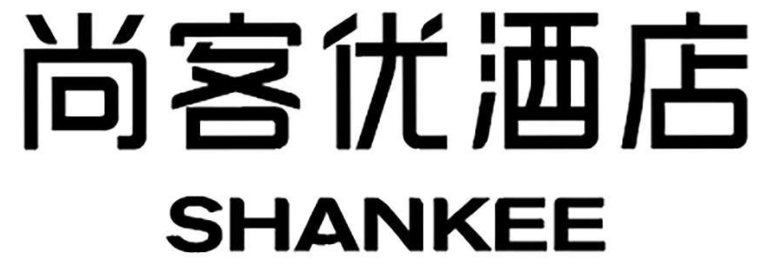
Class(es): 35 (Hotel business management for others; commercial administration of the licensing of the goods and services of others; business management consultancy; advertising; business management consultancy relating to franchising; outsourced administrative management services for hotels.).
43 (Hotel accommodation services; provision of temporary accommodation, including hotels and inns);
IP Vietnam subsequently issued a Notice of Substantive Examination Results, accepting the application for registration in respect of Class 35 and certain services in Class 43.
Accordingly, the application was partially refused for some services in Class 43, specifically:
Due to being considered similar to the following reference trademark:
Trademark: 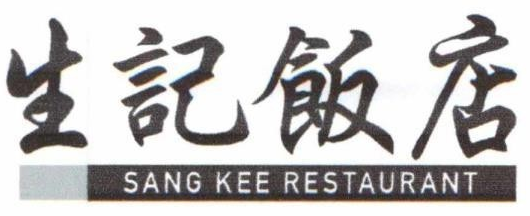
Class: 43 (Restaurant services; Chinese restaurant services; self-service restaurant services featuring Chinese cuisine; provision of food and beverages by restaurants; catering services for wedding receptions provided by restaurants; rental of function rooms for wedding receptions).
The cited trademark is also registered in Class 43, covering restaurant services; Chinese restaurant services; self-service restaurant services specializing in Chinese cuisine; provision of food and beverages by restaurants; catering services for wedding receptions provided by restaurants; and rental of function rooms for wedding receptions.
This case serves as a useful illustration because the applied-for trademark
“” and “”were considered to be highly similar, and the services designated by both parties fell within the same Nice Class (Class 43). Nevertheless, IP Vietnam did not refuse the entire specification of services in Class 43.
The refusal was limited to services relating directly to the provision of food and beverages, restaurant services, cafes, bars, and similar hospitality services – namely, services that were considered identical or closely similar to those covered by the cited trademark.
Conversely, services such as hotel accommodation and temporary lodging were accepted for protection, even though they also belonged to Class 43. This shows that the Intellectual Property Office did not apply a mechanical approach based on group numbers, but rather specifically assessed the nature of each service in the application.
3. The Key Criterion: Commercial Proximity Rather Than Mere Class Numbers
In practice, when assessing the similarity between goods/services the examining authority generally considers multiple factors, including:
- Nature of the goods/services: Are the goods/services of the same type, nature, or field of provision? For example, “restaurant services,” “coffee shop services,” “self-service restaurant services,” and “bar services” are all food and beverage services, exhibiting a high degree of similarity. Meanwhile, “hotel accommodation services,” while potentially belonging to the hotel/tourism sector, are fundamentally different from “restaurant services.”
- Purpose and intended use: Do the services aim to meet the same consumer needs? Hotel services primarily aim to provide accommodation/stay. Restaurant services primarily aim to provide food and beverages. These services may coexist within the same business model, but they do not necessarily have the same primary function.
- Relevant consumers and trade channels: Whether the goods or services are directed to the same group of consumers and are marketed or provided through the same commercial channels, business establishments, or methods of trade. Where goods or services are offered within the same commercial environment, the likelihood that consumers may be confused as to their commercial origin may increase.
- Complementary, competitive, or substitutable relationship: Are the goods/services complementary, competitive, or substitutable? Restaurant, cafe, eatery, and bar services are closely related. Meanwhile, hotel accommodation services may accompany restaurant services in practice, but this does not automatically mean they are similar in all cases.
- Potential for confusion regarding commercial origin: The core issue remains whether the average consumer, under normal trading conditions, might mistakenly believe that goods/services bearing corresponding trademarks have the same commercial origin or are economically related to each other.
4. Practical Implications for Applicants and Trademark Owners
From the above practical experience, several important points can be drawn for businesses, trademark owners, and intellectual property lawyers when assessing the registrability of trademarks in Vietnam.
- First, applicants should not rely solely on the Nice Classification when assessing registrability. Clearance searches and risk assessments should focus on the specific goods or services designated in the application, rather than merely determining whether they fall within the same or different Nice Classes.
- Second, the existence of a competing trademark in the same class does not necessarily negate the entire registrability of the applied-for trademark. If a conflict arises only with respect to a portion of the goods/services, the Intellectual Property Office may only issue a partial refusal, while still accepting the remaining goods/services.
- Third, the specification of goods and services should be drafted strategically. An overly broad or imprecisely worded specification may unnecessarily increase the likelihood of refusal. Conversely, a carefully tailored specification that accurately reflects the applicant’s core business activities while avoiding goods or services likely to conflict with earlier trademark rights can significantly improve the prospects of successful registration.
- Fourth, upon receiving a provisional refusal, applicants should not automatically assume that the entire application is beyond remedy. In many cases, it remains possible to overcome the refusal by arguing that certain designated goods or services are not similar to those covered by the cited trademark, or by voluntarily limiting or deleting the goods or services presenting the highest risk while preserving protection for the remainder of the application.
5. Conclusion
In Vietnamese trademark practice, the relevant question is not simply: “Are the two trademarks similar, and do they cover goods or services in the same Nice Class?”
The more appropriate question is: “Are the specific goods or services covered by the respective trademarks so closely related that the average consumer is likely to be confused as to their commercial origin?“
This distinction has significant practical implications. A trademark application may be refused in respect of certain goods or services while still being accepted for registration for others, even where all of those goods or services fall within the same Nice Class.
Therefore, for rights holders and applicants planning to register trademarks in Vietnam, the assessment of registrability should not stop at comparing the signs and class numbers. A detailed analysis of the nature, intended use, target customers, commercial channels, and actual relationship between the goods/services of the trademark being applied for and the competing trademarks is necessary.
In other words, a trademark application that is similar to and used for goods/services in the same class as a pre-existing trademark may face a higher likelihood of refusal, but this does not necessarily justify refusing the application in its entirety.
QUAN, Nguyen Vu | Partner, IP Attorney
Related Articles:
- Cofemel v. G-Star: The new standard of the European Court of Justice – Can a pair of jeans be considered a “work of art”?
- USM v. Konektra: Does a Functional Product Require a Higher Degree of Creativity to Merit Copyright Protection?
- New product launch: How to keep your product design from being “stolen”?
- Industrial Design Related Matters in Vietnam
- Industrial design protection for products under the Hague System – Key to business success in Vietnam
- To register or to lose, a costly lesson from a typical industrial design dispute in Vietnam
- Provisional rights to patents and industrial designs in Vietnam – What you need to know?
- Industrial Design Or Copyright Protection, Which You May Be Unaware Of?
- What are Key Considerations for Industrial Design Divisional Application in Vietnam?
- Copyright – a powerful and effective weapon to repress trademark and industrial design infringements in Vietnam
- 10 Key Points from Vietnam’s New IP Decree No. 65/2023/ND-CP
- Handling intellectual property rights infringement in Vietnam: Which measures are effective?
- Difference between Copyright and Industrial Design Right
- Amendments to patent and industrial design regulations under the draft of the amended Intellectual Property Law