






Similarity Does Not Necessarily Mean Confusion: What Strategy Can Secure Trademark Protection in the Face of Opposition from a Multinational Group?
Being opposed by a major international group is never an encouraging signal for any business seeking protection for its trademark. That pressure becomes particularly acute when the Intellectual Property Office of Vietnam (“IP VIETNAM”), upon examining the matter, issues a notice of intended refusal. From that point onward, the task of protecting one’s rights no longer lies merely in rebutting the opposing party’s arguments; it becomes a matter of persuading IP VIETNAM to reconsider and reverse its own preliminary view – a view that may, to some extent, have been shaped by the intangible influence exerted by globally renowned brands.
In practice, overturning a notice of intended refusal once it has been issued – particularly where the opposing party owns a widely recognized and reputable trademark – is always a formidable challenge, with only limited prospects of success. Yet it was precisely in that unfavorable position that, through a carefully structured legal strategy, sharp legal reasoning, and a targeted approach focused on the decisive issues, KENFOX was able to develop a sufficiently deep and persuasive line of argument to gradually reverse the situation and pave the way for the trademark to proceed to protection.
Background
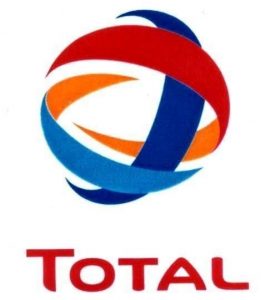
On October 4, 2022, T&T Vietnam Investment Co., Ltd. filed Trademark Application No. 4-2022-41346 for the mark “T&T VIỆT NAM GAS” (device) in respect of goods and services in Classes 04 and 35, relating to gas, liquefied gas, and the trading and agency services for gas products. However, the applied-for mark was opposed by TotalEnergies SE, a multinational energy group. Thereafter, based on its consideration of the opposition and the results of substantive examination, IP VIETNAM issued a notice of intended refusal of protection for the mark in its entirety under Article 74.2(e) of the Intellectual Property Law, on the ground that the applied-for mark was considered confusingly similar to two prior marks owned by TOTAL S.A. and TotalEnergies SE, both of which are protected for products in the oil and gas, fuel, and energy sectors, particularly in Class 04.
| Applied-for mark | Cited marks |
 |  |
 |
Challenges of the Case
At first glance, the finding that the applied-for mark was confusingly similar to the cited marks was not without basis. Both the applied-for sign and TOTAL’s marks adopt a broadly similar design motif, namely curved coloured bands tapering at both ends, interlacing and wrapping around one another to create the impression of a three-dimensional globe or orbital structure. Although the “T&T Việt Nam Gas” mark includes additional green and ochre/yellow elements, its use of red and blue curved bands embracing one another produces a visual impression strikingly close to TOTAL’s well-known globe device. The “T&T” mark also contains a vertical blue ellipse and a red flame element at the centre. However, in trademark assessment, where the principal figurative element – here, the interlaced globe-like device – is already highly similar to an earlier mark, minor internal additions are often insufficient to dispel the overall similarity.
The difficulty of this case arose not only from the degree of similarity between the signs, but also from the position of the opposing party itself. TOTAL is a global energy group and the owner of a globe logo with strong distinctiveness and market recognition. In that context, any sign used in the same sector and containing a figurative element that evokes a similar association is likely to be examined under a more stringent standard, given the real possibility that the relevant public may assume the existence of a commercial connection, licence, affiliation, or common trade origin between the parties. This factor created an intangible yet very real pressure. As a result, the legal challenge was not merely to demonstrate differences between the marks, but also to methodically dismantle an unfavorable preliminary assessment formed under the considerable shadow cast by a globally recognized brand.
Outcome of the Case
Upon a comprehensive review of the case, together with the arguments, analyses, and supporting documents submitted, the Intellectual Property Office of Vietnam officially withdrew the preliminary refusal, rejected TOTAL’s opposition, and accepted the mark for protection in the name of T&T Vietnam Investment Co., Ltd.
This success was not the result of chance. Rather, it was achieved through a systematic legal strategy and an appropriately calibrated approach to handling cases in which a mark is alleged to be confusingly similar to an earlier trademark, particularly where the opposing party is the owner of a well-known mark. The handling of this matter offers several important observations and strategic lessons of critical significance for businesses seeking to safeguard their intellectual property assets.
Key Observations and Strategic Approaches Drawn from the Case
- Dissecting and establishing overall distinctiveness: Rather than becoming entangled in an artificial, piecemeal comparison of individual geometric details alleged to be similar, the more effective approach in cases arising under Article 74.2(e) is to assess the marks on the basis of their overall commercial impression. This requires a precise and disciplined analysis aimed at highlighting the clear differences in overall structure, pronunciation, meaning, and design style.
Through a systematic examination of these factors – not only the figurative elements, but also the overall composition, pronunciation, conceptual meaning, and visual presentation of the trademarks at issue – it is possible to demonstrate that, although certain graphic similarities may exist, the marks nonetheless create entirely different overall commercial impressions in the perception of consumers. When encountered in an actual commercial context, consumers are unlikely to associate the marks with one another or to be confused as to their commercial origin. On that basis, the likelihood of confusion may be excluded when the marks are assessed as a whole.
- Not every similarity gives rise to a likelihood of confusion: One point that must be clearly emphasized is that similarity in a design motif or in certain figurative elements does not automatically mean that the marks are similar in the legal sense. In examination practice, the decisive issue is not the mere existence of common features, but rather the degree, significance, and role of those features within the mark as a whole.
In particular, where the allegedly similar elements are not components of strong distinctiveness or do not dominate the overall impression of the sign, reliance on those shared features alone is insufficient to support a conclusion that confusion is likely.
- Establishing good faith and independent creation: When faced with opposition from a multinational corporation, a later-filed mark can easily be portrayed as having sought to imitate or free-ride on the reputation of the earlier mark. This case demonstrates the importance of deploying complementary legal tools. One strong basis for rebutting allegations of imitation or unfair association is to prove an independent process of creation. The flexible use of supporting legal mechanisms – most notably the fact that the applied-for mark had already been granted a Copyright Registration Certificate – combined with historical evidence showing long-standing commercial use, can help establish the applicant’s good faith and reinforce the mark’s independent position in the marketplace.
- Relying on precedent to break the claimed monopoly over visual concepts: Similarity in certain basic geometric components (such as a globe, an ellipse, or comparable shapes) does not, in itself, automatically give rise to a likelihood of confusion. Conducting searches, gathering evidence, and citing examination practices in which marks containing similar components have nevertheless been allowed to coexist can serve as a highly effective legal lever. This demonstrates that similarity in a limited number of elements does not necessarily equate to legal similarity or confusion, while at the same time requiring the examining authority to maintain a consistent and equitable standard of assessment for all applicants.
This provides a practical basis for requesting that IP VIETNAM apply the principles of consistency and fairness in its examination standards. In practice, not a few marks that may appear, at first glance, to bear certain similarities have nonetheless been found sufficiently distinctive and accepted for protection in Vietnam. For example, “ ” under IR No. 1224225 and “
 ” as compared to “
 ” under IR No. 1230780, or “
 ” under Trademark Registration No. 278698 as compared to “
 ”
”
Conclusion
Bringing the dispute to a close, the successful defense of the “T&T VIỆT NAM GAS” trademark against TOTAL’s opposition once again reaffirms a fundamental principle in trademark examination: it is the overall commercial impression that is determinative, rather than a mechanical comparison or a fragmented analysis of individual details in isolation. No monopoly can be regarded as absolute where it runs contrary to the actual perception of consumers in the marketplace.
Clearly, in intellectual property disputes, the ultimate outcome is not determined by the size or reputation of the opposing party, but by the quality of the legal arguments, the strength of the evidence, and the precision of the legal strategy employed. The close integration of a distinctiveness analysis, the clarification of factors demonstrating independence and good faith, and the reasoned reliance on examination practice all contributed to neutralizing the allegations of confusion.
From a broader perspective, the case also underscores an important principle: intellectual property is not merely a subject of legal protection, but a core commercial asset directly tied to a company’s competitive position. It must therefore be protected through a legal strategy that is well-structured, consistent, and sufficiently robust in depth and substance.
QUAN, Nguyen Vu | Partner, IP Attorney
PHAN, Do Thi | Special Counsel
HONG, Hoang Thi Tuyet | Senior Trademark Attorney
Related Articles:
- MEGA MGC COFFEE: A “Reversal” Strategy and Lessons in Trademark Rights Establishment in Vietnam
- How to overcome Vietnam’s refusal of allegedly descriptive trademarks?
- Trademark Refusal in Vietnam, Laos and Cambodia: The Fine Line Between Descriptive and Suggestive
- Should you abandon a trademark application temporarily refused registration in Vietnam?
- Trademark Application & Registration Process: A Comprehensive Guide For Foreign Enterprises in Vietnam
- “Similar” product packaging: How to handle unfair competition and copyright legislation in Vietnam?
- Trademark Registration in Vietnam: What You Need to Know
- Overcome a provisional refusal against an International Registration Designating Vietnam – difficult but never give up!