






Dual Protection in Europe: When a Bicycle Bag Qualifies Both as a Registered Design and as a Copyright Work
Do you believe that merely changing the colour of the stitching, adding a different logo, or arguing that a design merely “follows market trends” is sufficient to avoid allegations of design infringement? The recent judgment of the District Court of The Hague (the Netherlands) in the dispute between Basil and BRN demonstrates that such an approach can no longer be regarded as a “safe harbour” for alleged infringers.
The case not only marks an important victory for the bicycle bag manufacturer Basil, but also provides a compelling illustration of the dual protection mechanism available under European law, whereby an everyday utilitarian product may simultaneously enjoy robust protection under Community Design Law while also qualifying as a copyright work under copyright law.
In this article, KENFOX IP & Law Office analyses the key legal reasoning that persuaded the Court to reject entirely the infringing party’s mosaic approach to design comparison and to reaffirm the substantial scope of protection afforded to designs that might otherwise appear to be “purely functional”.
1. Background
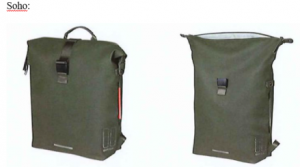
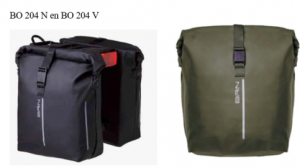
The Claimant (Basil) alleged that the Defendant (BRN) had manufactured and distributed a number of bicycle bag models (BO 202, BO 204 and BO 205) that copied the designs of Basil’s three successful product lines, namely Miles, Soho, and City Shopper. Basil commenced proceedings seeking the grant of a preliminary injunction based upon the principle of “dual protection”, relying simultaneously upon its registered design rights and its copyright.
2. Key Findings of the Court
Validity:
- Rejection of the “Technical Function” Defence: The Court held that, although bicycle bags are functional products, designers nevertheless enjoy a significant degree of creative freedom in relation to aspects such as shape, fastening mechanisms, contours, and other design features. Consequently, the designs were not considered to be dictated exclusively by technical function and therefore satisfied the requirements for design protection.
- Rejection of the “Mosaic Approach”: The Court rejected BRN’s attempt to deny the novelty of Basil’s designs by piecing together isolated design elements taken from various earlier products. The Court emphasised that validity must be assessed by comparing the contested design against each individual prior design separately, rather than through an artificial combination of features extracted from multiple prior designs.
- Recognition of Copyright in a Functional Product: In relation to the City Shopper model, the Court confirmed that the particular combination of design elements—even where each individual element might not itself be novel—was capable of constituting an original intellectual creation and therefore qualified for copyright protection.
Infringement:
- The “Overall Impression” Test: The Court held that BRN’s products produced the same overall impression on the informed user as Basil’s corresponding designs.
- Minor Modifications Were Ineffective: BRN’s attempts to differentiate its products—including adding its own brand logo, changing the colour of the stitching, incorporating reflective strips, or replacing the fold-over closure with a roll-top closure—were regarded by the Court as merely minor details that were insufficient to alter the products’ overall impression and therefore incapable of avoiding a finding of infringement.
3. Outcome of the Judgment
- Injunction: BRN was prohibited from manufacturing, marketing, importing, or otherwise commercialising the infringing bicycle bag models throughout the Netherlands in respect of the copyright claims, together with the corresponding remedies available under the Community Design regime, which have a broader territorial effect.
- Recall Order: BRN was ordered to send recall notices requiring its professional customers to return their remaining inventory of the infringing products.
- Financial Sanctions: The Court imposed a penalty payment of up to EUR 100,000 and further ordered BRN to reimburse Basil for the entirety of the legal costs incurred in the proceedings (approximately EUR 16,000).
4. Why Did the Court Reject the Defendant’s Argument that the Bicycle Bag Design Was Purely Dictated by “Technical Function”?
In disputes concerning the design protection of applied products (such as bags, footwear and furniture), the argument that a design is dictated by technical function is one of the most frequently invoked defences. The dispute between Basil and BRN provides a textbook example of how the Dutch courts—and, more broadly, the case law of the European Union—approach and assess this argument.

[1] The Defendant’s Argument: “Form Follows Function”
In an attempt to defeat Basil’s infringement claims and to narrow the scope of protection afforded to the asserted designs, BRN advanced a series of arguments based upon the utilitarian nature of bicycle bags.
- Technical Function Dictated the Design: BRN contended that the appearance of the Miles and Soho bicycle bags was dictated entirely by the technical function of the products. According to BRN, the bags necessarily had to possess a particular shape in order to accommodate personal belongings, incorporate a fastening mechanism to protect the contents, and, most importantly, be capable of being securely attached to a bicycle.
- Limited Designer’s Freedom: BRN further argued that these stringent technical requirements left designers with only a very limited degree of creative freedom. In its submission, designers had little practical choice but to produce products having substantially the same appearance.
- The Intended Legal Consequence: On that basis, BRN invited the Court to conclude that, because the designer’s degree of freedom was limited, even relatively minor differences—such as the addition of a logo, alterations to the stitching colour, or the incorporation of reflective strips—were sufficient to produce a different overall appearance and therefore avoid infringement. BRN maintained that the similarities between the competing products resulted from unavoidable technical constraints rather than from copying.
[2] The Court’s Analysis and Findings: The Existence of Creative Choices
The District Court of The Hague rejected BRN’s submissions by applying a structured two-stage analysis.
Step 1 – Assessing Existing Designs to Determine the Designer’s Degree of Freedom: The Court acknowledged that bicycle bags are subject to certain technical constraints (for example, they must be capable of being mounted on a bicycle). However, after examining the existing bicycle bag designs available on the market, the Court found that:
- Numerous bicycle bag designs already existed.
- Although they all performed the same function—namely, storing belongings and being mounted on a bicycle—different manufacturers adopted entirely different shapes, flap configurations and fastening mechanisms.
- Conclusion: This demonstrates that technical functionality did not require designers to create designs identical or substantially similar to the Miles or Soho models.
Step 2 – Identifying Non-Technical Aesthetic Choices: The Court further identified a number of features that reflected Basil’s own creative choices rather than technical necessity.
- Shape: The decision to adopt a streamlined, rounded silhouette (as in Miles) or an angular rectangular form with chamfered corners (as in Soho) represented aesthetic design choices rather than technical requirements.
- Closure System: The placement of the fastening buckle in the centre of the bag, combined with the vertical strap extending towards the base, constituted a distinctive design arrangement. This was plainly not the only possible method of closing a bicycle bag.
- Decorative Design Lines: The stitching patterns and decorative bands surrounding the flap were purely aesthetic elements. They served no mandatory technical function.
The Court’s Conclusion. The Court ultimately concluded that the designer’s degree of freedom in relation to bicycle bags was substantial. Because designers enjoyed a high degree of freedom, the corresponding scope of design protection was likewise broad. Consequently, the relatively minor modifications introduced by BRN were insufficient to avoid a finding of infringement.
[3] Key Legal Principles from the Perspective of Design Law
The judgment gives rise to four important principles governing the assessment of the technical function exclusion under European design law:
Principle 1 – The Alternative Designs Doctrine: Where the same technical function can be achieved through multiple alternative forms or configurations, the particular appearance chosen cannot be regarded as being dictated exclusively by technical function. If competing manufacturers are capable of designing products differently while maintaining identical functionality, the design necessarily contains aesthetic choices capable of attracting legal protection.
Principle 2 – The Inverse Proportionality Rule: This is one of the most significant principles in design litigation:
- Greater designer’s freedom → broader scope of protection. Accordingly, competitors must depart significantly from the protected design in order to avoid infringement.
- More limited designer’s freedom → narrower scope of protection. Consequently, relatively modest differences may suffice to avoid infringement.
- Application in the present case: Because the Court found that designers enjoyed considerable freedom in designing bicycle bags, Basil’s designs benefited from a correspondingly broad scope of protection. BRN’s minor alterations therefore failed to distinguish its products from Basil’s protected designs.
Principle 3 – Distinguishing Between an “Idea” and Its “Expression”: The law does not protect the mere idea of a bicycle bag featuring, for example, a roll-top closure or a buckle fastening. Rather, it protects the particular expression of that idea—such as the proportions of the roll-top, its curvature, its relationship with the fastening mechanism, and the specific manner in which those features are combined. Accordingly, reliance upon a so-called “market trend”—for example, the popularity of roll-top closures—cannot justify reproducing another designer’s particular expression of that concept.
Principle 4 – The Synthetical Comparison Approach: When assessing both the technical function defence and the question of infringement, the product must not be dissected into isolated components, such as the buckle, the strap or the bag body, with each feature examined separately on the basis that it performs an individual technical function.
Instead, the product must be evaluated as a whole by considering the interaction and combination of all of its constituent elements. A buckle may indeed serve a technical purpose. However, the particular placement of that buckle, its colour, and the way in which it interacts visually with the stitching and the remaining design features collectively create the overall impression that is protected under design law.
5. Why Was the Bicycle Bag Also Entitled to Copyright Protection?
In the field of intellectual property, copyright protection for works of applied art (such as handbags, lamps, and furniture) is often more difficult to establish than for traditional artistic works (such as paintings and musical compositions). The Basil v. BRN case provides a classic illustration of how a Dutch court applied the European Union standard in determining the copyright protection afforded to a work of applied art.

[1] The Defendant’s (BRN’s) Argument: A Strategy of “Deconstruction and Devaluation”
In an effort to challenge the copyright subsisting in the City Shopper design, BRN adopted a commonly used litigation strategy commonly referred to as “deconstruction”—namely, breaking the design down into its individual components in an attempt to undermine its originality.
- Dissecting the Design into Individual Elements: BRN argued that each individual feature of the City Shopper bag had long existed in the public domain. For example, the rectangular shape is commonplace, the envelope-style flap is conventional, and side straps have likewise been used by others.
- Invoking the “Design Heritage” Doctrine (Reference to Prior Designs): BRN relied on documentary evidence (GP14) demonstrating that these individual features had already appeared in numerous other products available on the market.
- Conclusion Advanced by BRN: Since none of the individual features was novel or unique, BRN contended that the bag, when viewed as a whole, did not satisfy the requirement of “originality“ necessary for copyright protection. According to BRN, the design was merely a combination of pre-existing elements.
[2] The Court’s Analysis from the Perspective of Copyright Law
The Court rejected BRN’s “dissection” approach and instead adopted a holistic assessment, relying on the EU Infopaq jurisprudence.
- The Nature of Originality in Works of Applied Art: The Court held that a work is not required to consist entirely of individually original elements in order to qualify for copyright protection. The essential prerequisite is that the work constitutes the author’s own intellectual creation. Such originality is reflected in the author’s exercise of free and creative choices in selecting and combining the relevant elements.
- The Specific Combination of Elements Constitutes the Original Expression: The Court acknowledged that individual elements, such as a rectangular shape, a side pocket, PU leather straps, or a drawstring closure, may each be commonplace and commonly found in existing designs when considered in isolation. However, BRN successfully demonstrated that the particular arrangement of these elements in its bag was virtually identical in every material respect to the arrangement embodied in the City Shopper bag. Accordingly, it was the author’s particular selection and arrangement of those elements—rather than the individual elements themselves—that produced a distinctive overall impression. Such specific combination therefore constituted the author’s original intellectual creation and was eligible for copyright protection.
- Scope of Protection: The Court also clarified the scope of copyright protection. Since the City Shopper bag was composed of common design elements, the scope of protection afforded to it was relatively narrow. This means that copyright does not prevent others from independently creating similar bags based on those common elements. However, a narrow scope of protection does not render the copyright ineffective. It remains sufficient to prohibit near-identical reproductions of the author’s original combination of elements (such as the BO 205 bag manufactured by BRN), as such reproductions constitute infringement by copying the author’s specific arrangement of those elements.
[3] Core Legal Principles from the Copyright Perspective
From the Court’s ruling concerning the City Shopper design, four key principles may be distilled for designers and businesses when establishing copyright protection for applied products:
- Principle 1: The Whole Is Greater than the Sum of Its Parts: In copyright law, 1 + 1 does not necessarily equal 2—it may equal 3. Even where individual elements (A, B and C) are not themselves original, the work may nevertheless qualify for copyright protection if those elements are arranged in a distinctive manner (e.g. A–C–B) through the author’s own creative choices. Accordingly, the Court focuses on the overall impression created by the combination of those elements, rather than assessing each individual feature in isolation.
- Principle 2: The Collapse of the “Mosaic Approach”: A defendant cannot defeat a copyright claim merely by arguing that: “This feature resembles a bag from 1990, while that feature resembles a bag from 2000.” Unless the defendant can identify a single prior work that embodies substantially the same overall combination as the claimant’s design, such an argument will not succeed. The originality lies not in the individual elements themselves, but in the author’s creative selection and arrangement of those elements.
- Principle 3: Thin Copyright: Where a work is composed largely of common or widely used design elements, the resulting copyright protection may be regarded as “thin”. This does not mean that no protection exists. Rather, it means that the copyright owner is generally more likely to succeed only where the competing product reproduces the protected design identically or in a highly similar manner. If the competitor significantly alters the arrangement, proportions or composition of the design elements, infringement may no longer be established.
- Principle 4: A Low Threshold for Originality: Under the prevailing approach adopted by the European Union, the threshold for copyright protection is relatively low. A work does not have to be an artistic masterpiece or exhibit complete novelty. It is sufficient that the work constitutes the author’s own intellectual creation. This approach encourages businesses to rely on copyright protection for commercial products, provided that they can demonstrate that the design originated from their own creative efforts rather than being copied from others.
Conclusion
From a practical perspective, Basil v. BRN serves as a leading example of how the European legal framework effectively operates through the mechanism of dual protection. Rather than relying on a single form of protection, this mechanism provides rights holders with a comprehensive legal safeguard against challenges based on technical considerations (such as arguments relating to novelty or the distinctive character of a design). In such circumstances, copyright serves as a “second line of defence” by protecting the creative essence of a design—namely, the overall impression and the manner in which its creative elements are combined—even where each individual element may already exist within the existing design corpus.
At the same time, the judgment sends a clear message to businesses pursuing a strategy of “intelligent copying” in the marketplace: merely replacing a logo, changing the colour of the stitching, adding reflective strips, or making minor adjustments to the opening and closing mechanism is insufficient to avoid infringement where the competing product continues to produce the same overall impression as the protected design. In other words, the Court examines the “soul” of the design rather than simply counting the number of modified details. The judgment therefore serves as a direct warning to businesses that deliberately adopt a strategy of remaining “just within the legal boundary” when imitating another party’s design.
From a litigation strategy perspective, Basil’s success was attributable not merely to persuasive legal argumentation, but to its ability to demonstrate that the designer’s degree of freedom in the bicycle bag industry was substantial, thereby significantly broadening the scope of protection afforded to its registered designs. Once the Court accepted that designers had numerous technically feasible alternatives available to them, BRN’s argument that its products were “necessarily similar because of their technical function” collapsed. As a result, the minor differences relied upon by BRN in its defence carried little weight in the Court’s infringement analysis.
With 15 years of experience and a well-established reputation in the field of Intellectual Property, KENFOX IP & Law Office has accompanied thousands of businesses in protecting and enforcing their intellectual property rights. We not only assist clients in securing protection for industrial designs, trade marks and copyright, but also provide comprehensive IP enforcement strategies designed to combat even the most sophisticated forms of imitation.
Nguyễn Vũ Quân| Partner, IP Attorney
Đào Thị Thúy Nga| Senior Patent Attorney
Nguyễn Thị Kim Anh| Patent Executive
Related Articles:
- Sophisticated Copycat Products in Vietnam: Should Copyright or Industrial Design Rights Be Relied Upon for Enforcement?
- Copyright – a powerful and effective weapon to repress trademark and industrial design infringements in Vietnam
- Industrial Design Or Copyright Protection, Which You May Be Unaware Of?
- Brompton – When a Folding Bicycle Becomes a “Work” – The Judgment of the Court of Justice of the European Union
- 6 key takeaways to cope with patent infringement allegations in Vietnam
- Industrial design protection for products under the Hague System – Key to business success in Vietnam
- Vietnam’s Amended IP Law Of 2022: How 12 Critical Patent Provisions Affect You
- Functional Products: Industrial Design Protection or Copyright Protection in Vietnam?
- To register or to lose, a costly lesson from a typical industrial design dispute in Vietnam
- Whether Functional Products Are Eligible for Protection as ‘Works of Applied Art’ in Vietnam?